
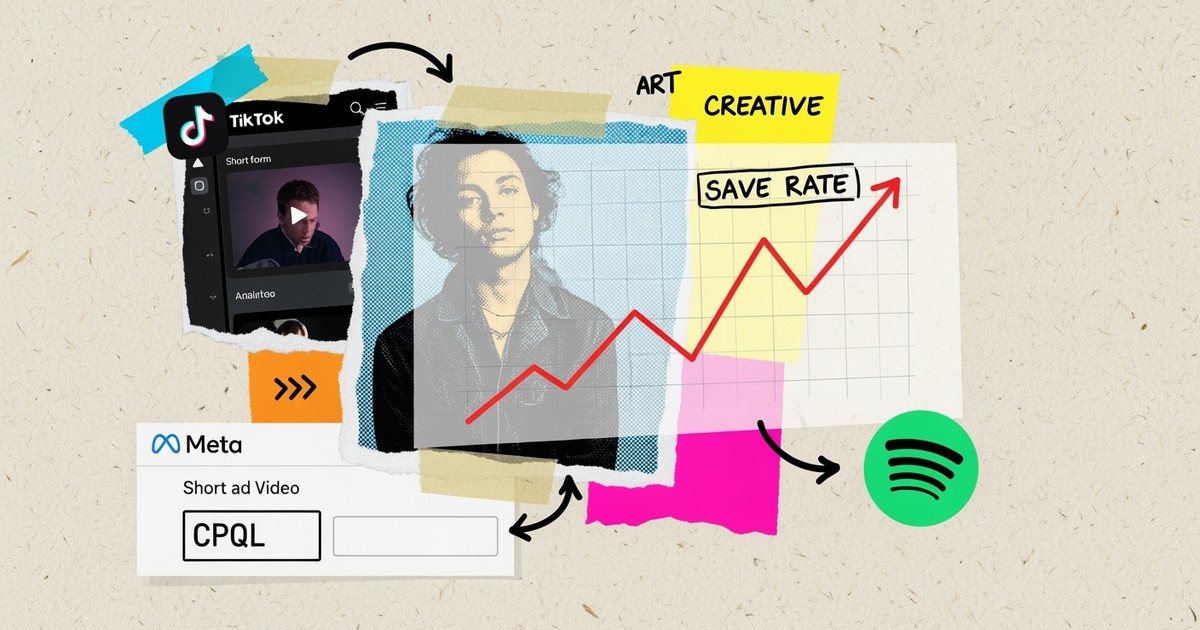
Ad-Tech für die Musikpromotion hilft Labels dabei, potenzielle Fans zu erreichen und Aufmerksamkeit in saves zu verwandeln. Dieser Leitfaden beschreibt einen praktischen Tech-Stack, einen wiederholbaren Workflow, die richtigen KPIs und zu vermeidende Risiken.
Das Problem mit traditioneller Promotion
Radio, Presse und organische Posts sind nach wie vor wichtig, aber sie sind langsam, schwer messbar und unvorhersehbar. Labels benötigen planbare Reichweite, schnelle kreative Tests und klare Kosten pro Ergebnis. Ad-Tech bietet Targeting, automatisierten Einkauf und Analysen, damit Sie belegen können, was funktioniert, ineffektive Maßnahmen pausieren und Erfolge über Releases hinweg skalieren können.
Der moderne Ad-Tech-Stack für Labels
Ein solider Stack kombiniert Audience-Plattformen, Routing, Messung und Kreativ-Tools. Die meisten Labels starten mit vier bezahlten Kanälen, die konsistent konvertieren: Meta, Google und YouTube, TikTok und Snapchat. Nutzen Sie musikspezifische Placements, wenn verfügbar, um Hörer direkt in ihrer Session anzusprechen.
Plattform-Eignung auf einen Blick
| Plattform | Hauptstärke | Anwendungsfall |
|---|---|---|
| Meta (FB/IG) | Breite Reichweite, starke Lookalikes, schnelle Kreativtests | Kaltstart, Retargeting von saves und Engagern |
| Google & YouTube | Intent- und Video-fokussierte Entdeckung, starker Long-Tail | YouTube-Views zu Abonnenten, Suche zu SmartLink |
| TikTok | Kulturelle Entdeckung und Kurzvideo-Engagement | Hook-Tests, schnelles Audience-Feedback |
| Snapchat | Kostengünstige Kurzvideo-Reichweite in ausgewählten Märkten | Effiziente Frequenz, junge Zielgruppen |
Musikspezifische Placements wie In-App-Empfehlungen können helfen, sind jedoch kein Ersatz für bewährte bezahlte Kanäle. Halten Sie Ihr Routing mit einem SmartLink einfach und erfassen Sie First-Party-Daten, um Hörer mit hoher Kaufabsicht erneut anzusprechen.
Dynamoi CPM, CPC und CPV Benchmarks nach Plattform
Diese Benchmarks spiegeln aggregierte Daten aus verwalteten Musikkampagnen in Tier-1- und Tier-2-Märkten im Zeitraum 2025-2026 wider. Ihre Ergebnisse variieren je nach Genre, Kreativqualität und Gebietsmix.
Meta (Instagram/Facebook)
| Metrik | Tier 1 (US, UK, AU, CA) | Tier 2 (LatAm, SEA, Teile der EU) |
|---|---|---|
| CPM | 23 USD - 77 USD | 2 USD - 9 USD |
| CPC zu SmartLink | 0,45 USD - 1,50 USD | 0,15 USD - 0,60 USD |
| Kosten pro save | 2,51 USD - 4,70 USD | 0,24 USD - 2,40 USD |
| Save-Rate (Link-Besucher, die speichern) | 15% - 30% | 18% - 35% |
Meta bleibt die stärkste Plattform für saves, wenn sie mit serverseitigem Conversion-Tracking kombiniert wird. Die Kluft zwischen Tier-1- und Tier-2-Ökonomie ist dramatisch: Ein Tier-2-Test mit 250 USD kann 100+ saves generieren – genug Signal, um kreative Inhalte vor dem Einsatz des Tier-1-Budgets zu validieren.
YouTube / Google Ads
| Metrik | In-Feed Ads | Skippable In-Stream | Shorts |
|---|---|---|---|
| CPV-Bereich | 0,10 USD - 0,30 USD | 0,02 USD - 0,10 USD | 0,01 USD - 0,05 USD |
| View-Rate | 5% - 15% | 25% - 40% | Variiert |
| Abonnenten-CAC | 0,50 USD - 2,00 USD | 1,00 USD - 4,00 USD | In Reifung |
In-Feed-Anzeigen ziehen Zuschauer mit höherer Absicht an, die aktiv auf Ihr Thumbnail klicken. In-Stream erreicht breitere Zielgruppen zu geringeren Kosten, jedoch mit weniger Intent. Shorts-Inventar ist neuer mit geringerem Wettbewerb und CPVs, obwohl die Messung noch in der Entwicklung ist.
TikTok
| Metrik | Bereich |
|---|---|
| CPM | 4 USD - 7 USD |
| CPC (Spark Ads) | 0,35 USD - 1,00 USD |
| Minimales Testbudget | 100 USD - 200 USD für aussagekräftige Erkenntnisse |
TikTok Spark Ads verstärken bestehende organische Posts, sodass sämtliches Engagement (Views, Kommentare, Shares) dem ursprünglichen Inhalt zugerechnet wird. Posts, die bereits organische Zugkraft zeigen, sind die besten Kandidaten für bezahlte Verstärkung.
Spotify native Tools
| Tool | Kostenmodell | Am besten für |
|---|---|---|
| Marquee | 0,20 USD - 0,50 USD pro erreichtem Hörer | Reaktivierung inaktiver Hörer (erfordert 1K Streams / 5K monatliche Hörer) |
| Showcase | Budget-flexibles Banner im Home-Feed | Re-Engagement neben Marquee |
| Ads Manager | ~15 USD/Tag Minimum, Auktionsbasiert | Erreichen von Free-Tier-Nutzern mit Audio-/Video-Ads |
Spotify gibt an, dass Marquee bis zu 10x mehr Hörer pro USD liefert als Social-Media-Anzeigen. Der Mechanismus ist logisch: Sie erreichen Menschen innerhalb der App in dem Moment, in dem sie entscheiden, was sie hören wollen, und die den Künstler bereits kennen.
Aufbau eines Label-Ready Workflows
Ein wiederholbarer Workflow hält Teams aufeinander abgestimmt und ermöglicht Verbesserungen in jedem Zyklus.
1) Ziel definieren
Wählen Sie ein primäres Ziel pro Kampagne. Beispiele: Erhöhung der Save-Rate bei einem Prioritäts-Track, Gewinnung von YouTube-Abonnenten oder Steigerung von presaves bei einer kommenden Single.
2) Messung einrichten
Implementieren Sie First-Party-Analysen, Ad-Pixel und UTM-Vorlagen. Tracken Sie mindestens: Lander-Klicks, Sitzungsdauer, Save- und Add-to-Playlist-Ereignisse sowie YouTube-Abos. Vereinheitlichen Sie Benennungskonventionen, damit Kreativmaterial, Zielgruppe und Gebiet gemeinsam analysiert werden können.
3) Kreativ-System
Standardisieren Sie Kurzvideo-Hooks, quadratische und vertikale Zuschnitte sowie drei Copy-Ansätze: emotional, Social Proof und Neugier. Aktualisieren Sie Top-Anzeigen wöchentlich, archivieren Sie leistungsschwache Ads und führen Sie eine Datenbank mit Rohmaterial für schnelle Edits.
4) Kampagnenstruktur
Nutzen Sie eine Prospecting-Kampagne pro Kanal mit 2–3 Zielgruppen-Frameworks und eine Retargeting-Kampagne, die High-Intent-Aktionen plattformübergreifend bündelt. Konzentrieren Sie Budgets, damit die Algorithmen schnell lernen.
5) Budget und Pacing
Starten Sie mit einem täglichen Basisbetrag, der mindestens 50 qualifizierte Lander-Klicks pro Anzeigengruppe pro Woche generiert, und skalieren Sie Gewinner in 20- bis 30-prozentigen Schritten. Pausieren Sie langsame Lernende, um die Signaldichte hoch zu halten.
6) Review-Schleife
Vergleichen Sie alle 7 Tage die Save-Rate nach Kreativmaterial und Zielgruppe und schichten Sie die Ausgaben um. Dokumentieren Sie Erkenntnisse, damit das nächste Release stärker startet.
Metriken, die den Algorithmus wirklich bewegen
Optimieren Sie nicht auf billige Klicks. Optimieren Sie auf qualifizierte musikalische Aktionen.
- Save-Rate - saves geteilt durch eindeutige Hörer. Starke Save-Raten korrelieren mit besserer Empfehlungsreichweite.
- Add-to-Playlist-Rate - Adds geteilt durch eindeutige Hörer. Nützlich, um „sticky“ Tracks zu identifizieren.
- Repeat Listen Share - Prozentsatz der Hörer mit 2 oder mehr Streams in 7 Tagen.
- Cost per qualified listener (CPQL) - Werbeausgaben geteilt durch Hörer, die den Track gespeichert haben.
- YouTube-Abonnenten-CAC - Werbeausgaben geteilt durch neue Netto-Abonnenten bei Creator-geführten Strategien.
Eine einfache Regel: Wenn ein Kreativmaterial oder eine Zielgruppe die CPQL senkt und gleichzeitig den Repeat Listen Share beibehält oder erhöht, skalieren Sie es. Wenn nicht, stoppen Sie es.
Sicherheit, Compliance und Betrug
Bleiben Sie richtlinienkonform, um Kataloge und Beziehungen zu schützen.
- Kein künstliches Streaming - Das Bezahlen für Streams oder garantierte Playlist-Plätze riskiert takedowns und Auswirkungen auf Lizenzgebühren. Siehe Spotifys Leitfaden zu künstlichem Streaming.
- Plattform-Richtlinien - Vermeiden Sie Falschdarstellungen und Spam-Weiterleitungen. Überprüfen Sie offizielle Anzeigenrichtlinien auf großen Plattformen wie Google Ads.
- Ad-Betrug - Nutzen Sie plattformseitige Ausschlüsse, begrenzen Sie obskure Placements und achten Sie auf anomale Klick-zu-Save-Verhältnisse nach Placement oder Domain.
- Datenschutz - Respektieren Sie regionale Gesetze, minimieren Sie Daten, die Sie nicht benötigen, und legen Sie Tracking auf Ihren Landingpages offen.
Beispiel-Blueprint: Single-Release-Zyklus
Drei Wochen vorher: Kit zusammenstellen. In Woche eins: Leichte Tests von 6 bis 9 Kreativmaterialien auf Meta und TikTok, um Hooks zu finden, die hohe Watch-Time und starke Outbound-Klicks erzielen. In Woche zwei: presave-Push starten und YouTube Shorts mit den Top-Hooks streuen.
Release-Woche: SmartLink auf Live-Streaming-Ziele umstellen, frische Schnitte der Gewinner-Kreativmaterialien rotieren und eine YouTube-Kampagne hinzufügen, die Zuschauer anderer Plattformen retargeted. Zwei Wochen nach Release: Budgets auf die Assets konzentrieren, die die beste Save-Rate und das Follower-Wachstum erzielen, dann Gebiete mit stabiler CPQL ausweiten.
Tools ohne Bloat wählen
Wählen Sie Tools, die sich sauber integrieren und die Zeit bis zur Erkenntnis verkürzen. Ihr Kern-Kit sollte einen Ads Manager für jeden Kanal, einen SmartLink mit Analysen, ein einfaches Data Warehouse oder Dashboard und einen einfachen Editor für schnelle kreative Iterationen enthalten.
Influencer-Tools können helfen, wenn Briefings wiederholbar sind und Sie Skalierung benötigen, z. B. Aspire oder Grin. Vermeiden Sie sich überschneidende Abonnements und bevorzugen Sie Automatisierung, die manuelle Schritte entfernt, anstatt Dashboards um ihrer selbst willen hinzuzufügen.
Wo beworbene Hörer am meisten verdienen
Werbeausgaben kaufen Aufmerksamkeit. Lizenzgebühren bestimmen, ob sich diese Aufmerksamkeit auszahlt. Der Plattform-RPM (Einnahmen pro tausend Streams) variiert stark genug, um die Kampagnenökonomie komplett zu verschieben.
| Plattform | RPM (Dynamoi First-Party-Daten) | Hinweise |
|---|---|---|
| Amazon Music | 9,02 USD | Höchste Auszahlung pro Stream; kleineres adressierbares Publikum |
| YouTube Art Tracks | 5,28 USD | Video + Audio Monetarisierung; RPM schwankt nach Land (DK 8,56 USD, US 7,10 USD) |
| Spotify | 3,02 USD | Größtes adressierbares Publikum für saves; niedriger pro Stream, aber höchstes Volumen |
| YouTube Content ID | 1,57 USD | Passives Einkommen durch nutzergenerierte Inhalte mit Ihrer Musik |
Die strategische Implikation: Kampagnen, die YouTube-Views in Ländern mit hohem RPM (Dänemark, Australien, USA) fördern, können sich teilweise durch sofortige AdSense-Rückzahlungen subventionieren. Kampagnen, die auf Spotify-saves abzielen, produzieren geringere Einnahmen pro Stream, erschließen aber die größte algorithmische Entdeckungsmaschine. Die optimale Aufteilung hängt von Ihrem Katalog und der Geografie Ihres Publikums ab. Für YouTube-RPM-Daten auf Länderebene siehe den YouTube RPM by country Datensatz. Für vollständige Lizenz-Benchmarks siehe die Streaming-Lizenzdaten.
Häufig gestellte Fragen
Kaufen Anzeigen direkt Streams?
Nein, Anzeigen kaufen Aufmerksamkeit. Ihre Musik und Ihr Routing konvertieren diese Aufmerksamkeit in Hörer, saves und Follower. Optimieren Sie auf diese nachgelagerten Aktionen.
Wie viel Budget brauche ich für den Start?
Genug, um statistische Signifikanz zu erreichen. Für eine Single starten viele Labels mit Tagesbudgets, die einige hundert qualifizierte Lander-Klicks pro Woche und Kanal liefern, und skalieren dann die Gewinner.
Was ist der schnellste Test, den ich durchführen kann?
Kreativ-fokussierte Tests in Kurzvideo-Placements. Validieren Sie 6 bis 9 Hooks schnell, wählen Sie die Top zwei aus und bauen Sie dann Zielgruppen und Budgets darum auf.
Welche Plattform sollte ich priorisieren?
Wählen Sie den Kanal, auf dem Ihr Publikum bereits aktiv ist und auf dem Ihr Team am schnellsten iterieren kann. Viele starten mit Meta und TikTok und ergänzen dann YouTube für dauerhafte Entdeckung.
Kann ich mich nur auf In-App-Promotions verlassen?
Betrachten Sie musikspezifische Placements als Ergänzung, nicht als Ersatz. Plattformübergreifende Anzeigen reduzieren Reichweitenrisiken und geben Ihnen breiteres kreatives Feedback.