TikTok vs Instagram Reels for Music Promotion | Dynamoi
Comparison
•
Updated
TikTok vs Instagram Reels for Music Promotion
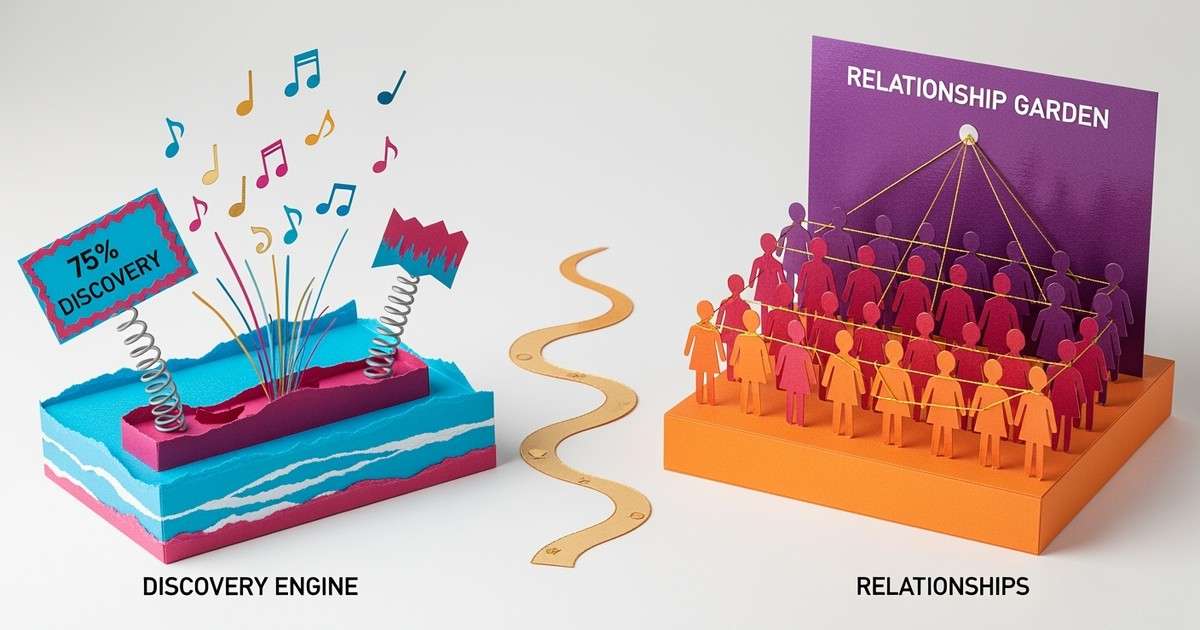
TikTok wins for discovery and viral potential. Instagram wins for fan relationships and advertising maturity. The best strategy uses both - TikTok for exposure, Instagram for conversion and retention.
TikTok and Instagram Reels both support short-form video with music, but they serve fundamentally different purposes in a music promotion strategy. Understanding these differences determines where to allocate time and budget.
Quick Comparison
Factor
TikTok
Instagram Reels
Primary strength
Discovery
Relationship building
Algorithm basis
Content quality
Social graph + content
Follower impact
Minimal
Significant
Music discovery rate
75% of users discover artists
Lower (data not published)
DSP integration
"Add to Music App" (direct)
None (manual search required)
Advertising maturity
Growing
Mature
Organic reach potential
High for new accounts
Limited for new accounts
Algorithm Differences
TikTok
TikTok's For You Page evaluates each video independently based on engagement signals. Follower count has minimal impact on distribution. An account with 100 followers can go viral as easily as one with 1 million.
For music: This means unknown artists with great content can reach massive audiences without existing fan bases. The algorithm is meritocratic at the content level.
Instagram Reels
Instagram's algorithm weighs your existing social graph more heavily. Reels from accounts you follow or that your friends engage with appear first. New accounts struggle to break through without existing audience or paid support.
For music: Established artists with Instagram followings see better Reels performance. New artists face an uphill battle for organic reach.
Music Discovery Metrics
TikTok publishes compelling discovery data: 75% of users discover new artists through the platform, 67% check songs on other platforms after hearing them on TikTok, and 84% of Billboard Global 200 songs first went viral on TikTok.
Instagram does not publicly report music discovery metrics. The platform is primarily visual, with music serving as accompaniment rather than the main attraction. The rate of "music-first" content consumption is lower.
The data is clear: TikTok is a music discovery platform. Instagram is a social platform where music sometimes features.
DSP Conversion Path
TikTok → DSP
User hears music in video
User taps sound icon → Sound Page
User taps "Add to Music App"
Track saves directly to Spotify/Apple Music
Three taps total.
Instagram Reels → DSP
User hears music in video
User sees song title (maybe)
User leaves Instagram
User searches for track on DSP
User finds and saves track
Five or more actions, including app switching and manual searching.
This friction difference is structural. TikTok was built with music industry integration; Instagram added music as a content enhancement feature.
Audience Demographics
When to Prioritize TikTok
Prioritize TikTok if you are a new artist with no existing audience, have a track with viral potential (catchy hooks, trend-friendly), target Gen Z demographics, focus on streaming volume growth, or have budget for creator partnerships.
When to Prioritize Instagram
Prioritize Instagram if you are an established artist with an existing Instagram following, focus on brand deals or industry relationships, target older demographics (25+), need mature advertising tools, or your content requires higher production value.
Platform-Specific Metrics
TikTok Success Indicators
Video creations using your sound
Sound Page visits and saves
"Add to Music App" taps
Completion rate on content featuring your music
Instagram Success Indicators
Saves and shares
Profile visits from Reels
Follower growth
Engagement rate (likes + comments / reach)
The Bottom Line
TikTok is the superior platform for music discovery. Instagram is the superior platform for fan relationships and advertising.
Running music promotion on Instagram alone means fighting the algorithm without the structural advantages TikTok offers for music.
Running music promotion on TikTok alone means generating attention that may not convert to lasting fan relationships.
Comparison
•
Updated
TikTok vs Instagram Reels for Music Promotion
TikTok wins for discovery and viral potential. Instagram wins for fan relationships and advertising maturity. The best strategy uses both - TikTok for exposure, Instagram for conversion and retention.
TikTok and Instagram Reels both support short-form video with music, but they serve fundamentally different purposes in a music promotion strategy. Understanding these differences determines where to allocate time and budget.
Quick Comparison
Factor
TikTok
Instagram Reels
Primary strength
Discovery
Relationship building
Algorithm basis
Content quality
Social graph + content
Follower impact
Minimal
Significant
Music discovery rate
75% of users discover artists
Lower (data not published)
DSP integration
"Add to Music App" (direct)
None (manual search required)
Advertising maturity
Growing
Mature
Organic reach potential
High for new accounts
Limited for new accounts
Algorithm Differences
TikTok
TikTok's For You Page evaluates each video independently based on engagement signals. Follower count has minimal impact on distribution. An account with 100 followers can go viral as easily as one with 1 million.
For music: This means unknown artists with great content can reach massive audiences without existing fan bases. The algorithm is meritocratic at the content level.
Instagram Reels
Instagram's algorithm weighs your existing social graph more heavily. Reels from accounts you follow or that your friends engage with appear first. New accounts struggle to break through without existing audience or paid support.
For music: Established artists with Instagram followings see better Reels performance. New artists face an uphill battle for organic reach.
Music Discovery Metrics
TikTok publishes compelling discovery data: 75% of users discover new artists through the platform, 67% check songs on other platforms after hearing them on TikTok, and 84% of Billboard Global 200 songs first went viral on TikTok.
Instagram does not publicly report music discovery metrics. The platform is primarily visual, with music serving as accompaniment rather than the main attraction. The rate of "music-first" content consumption is lower.
The data is clear: TikTok is a music discovery platform. Instagram is a social platform where music sometimes features.
DSP Conversion Path
TikTok → DSP
User hears music in video
User taps sound icon → Sound Page
User taps "Add to Music App"
Track saves directly to Spotify/Apple Music
Three taps total.
Instagram Reels → DSP
User hears music in video
User sees song title (maybe)
User leaves Instagram
User searches for track on DSP
User finds and saves track
Five or more actions, including app switching and manual searching.
This friction difference is structural. TikTok was built with music industry integration; Instagram added music as a content enhancement feature.
Audience Demographics
When to Prioritize TikTok
Prioritize TikTok if you are a new artist with no existing audience, have a track with viral potential (catchy hooks, trend-friendly), target Gen Z demographics, focus on streaming volume growth, or have budget for creator partnerships.
When to Prioritize Instagram
Prioritize Instagram if you are an established artist with an existing Instagram following, focus on brand deals or industry relationships, target older demographics (25+), need mature advertising tools, or your content requires higher production value.
Platform-Specific Metrics
TikTok Success Indicators
Video creations using your sound
Sound Page visits and saves
"Add to Music App" taps
Completion rate on content featuring your music
Instagram Success Indicators
Saves and shares
Profile visits from Reels
Follower growth
Engagement rate (likes + comments / reach)
The Bottom Line
TikTok is the superior platform for music discovery. Instagram is the superior platform for fan relationships and advertising.
Running music promotion on Instagram alone means fighting the algorithm without the structural advantages TikTok offers for music.
Running music promotion on TikTok alone means generating attention that may not convert to lasting fan relationships.
TikTok skews young and female: 48% of users are under 30, 54% are female, and the platform indexes heavily toward Gen Z. Users show higher engagement with trend participation and are more likely to create content using sounds rather than just consuming.
Instagram has broader age distribution with a more even gender split, including significant Millennial and older demographics. Users engage more with known entities and are more consumption-focused than creation-focused.
If your target audience is 25+ or you need industry/brand credibility, Instagram matters more. If targeting Gen Z for trend-driven discovery, TikTok dominates.
Advertising Capabilities
TikTok offers Spark Ads (boosting organic content), in-feed ads, and TopView premium placements. The minimum is $20/day per ad group. Targeting includes interest, behavior, and hashtag engagement, with music-specific optimization for sound adoption.
Instagram/Meta Ads include Reels ads, Story ads, and Feed ads with lower minimums ($5/day viable). Targeting is more extensive: demographic, interest, behavioral, and custom audience options with mature measurement and optimization.
Instagram/Meta advertising is more mature with better targeting options and lower minimums. TikTok advertising is catching up but remains less sophisticated. For music campaigns specifically, Meta Ads driving traffic to Spotify via smartlinks often outperform TikTok Ads for cost-per-save. TikTok Ads excel at sound adoption and trend seeding.
Content Strategy Differences
TikTok rewards trend participation and remixing, raw authentic content, and sound-first creation where music is the point. Videos run 15-60 seconds and engagement optimizes for video creations using your sound.
Instagram Reels rewards polished aesthetic content, personal connection and storytelling, and visual-first creation where music accompanies. Videos run 15-90 seconds (now up to 3 minutes) and engagement optimizes for saves and shares.
For artists, TikTok content can be rougher and more experimental. Instagram content should be more polished and brand-consistent.
Music Library Comparison
TikTok offers a more extensive music library with fewer restrictions. Instagram's library is more limited, particularly for business accounts that face additional licensing constraints.
TikTok allows user-uploaded sounds to potentially go viral. Instagram is more restrictive about unlicensed audio.
For artists, this means your distributed track is more likely to be available and usable on TikTok. On Instagram, check availability before planning Reels-based campaigns.
The Hybrid Strategy
Top-performing artists do not choose between platforms. They use each for its strength.
TikTok excels at discovery and viral reach, trend seeding, sound adoption, reaching new audiences, and direct DSP conversion. Instagram excels at fan relationship building, artist brand development, industry credibility, advertising to warm audiences, and long-term community engagement.
Content Flow
The optimal workflow creates content for TikTok first (trend participation, raw clips), then repurposes top-performing TikTok content to Reels. TikTok handles discovery while Instagram handles nurturing. Meta Ads can then drive TikTok-discovered fans to DSP conversion.
This flow uses TikTok's discovery strength while leveraging Instagram's relationship-building and advertising capabilities.
The winning strategy: Use TikTok to get discovered, then Instagram to build the relationship. Repurpose content across both, but create with each platform's strengths in mind.
TikTok skews young and female: 48% of users are under 30, 54% are female, and the platform indexes heavily toward Gen Z. Users show higher engagement with trend participation and are more likely to create content using sounds rather than just consuming.
Instagram has broader age distribution with a more even gender split, including significant Millennial and older demographics. Users engage more with known entities and are more consumption-focused than creation-focused.
If your target audience is 25+ or you need industry/brand credibility, Instagram matters more. If targeting Gen Z for trend-driven discovery, TikTok dominates.
Advertising Capabilities
TikTok offers Spark Ads (boosting organic content), in-feed ads, and TopView premium placements. The minimum is $20/day per ad group. Targeting includes interest, behavior, and hashtag engagement, with music-specific optimization for sound adoption.
Instagram/Meta Ads include Reels ads, Story ads, and Feed ads with lower minimums ($5/day viable). Targeting is more extensive: demographic, interest, behavioral, and custom audience options with mature measurement and optimization.
Instagram/Meta advertising is more mature with better targeting options and lower minimums. TikTok advertising is catching up but remains less sophisticated. For music campaigns specifically, Meta Ads driving traffic to Spotify via smartlinks often outperform TikTok Ads for cost-per-save. TikTok Ads excel at sound adoption and trend seeding.
Content Strategy Differences
TikTok rewards trend participation and remixing, raw authentic content, and sound-first creation where music is the point. Videos run 15-60 seconds and engagement optimizes for video creations using your sound.
Instagram Reels rewards polished aesthetic content, personal connection and storytelling, and visual-first creation where music accompanies. Videos run 15-90 seconds (now up to 3 minutes) and engagement optimizes for saves and shares.
For artists, TikTok content can be rougher and more experimental. Instagram content should be more polished and brand-consistent.
Music Library Comparison
TikTok offers a more extensive music library with fewer restrictions. Instagram's library is more limited, particularly for business accounts that face additional licensing constraints.
TikTok allows user-uploaded sounds to potentially go viral. Instagram is more restrictive about unlicensed audio.
For artists, this means your distributed track is more likely to be available and usable on TikTok. On Instagram, check availability before planning Reels-based campaigns.
The Hybrid Strategy
Top-performing artists do not choose between platforms. They use each for its strength.
TikTok excels at discovery and viral reach, trend seeding, sound adoption, reaching new audiences, and direct DSP conversion. Instagram excels at fan relationship building, artist brand development, industry credibility, advertising to warm audiences, and long-term community engagement.
Content Flow
The optimal workflow creates content for TikTok first (trend participation, raw clips), then repurposes top-performing TikTok content to Reels. TikTok handles discovery while Instagram handles nurturing. Meta Ads can then drive TikTok-discovered fans to DSP conversion.
This flow uses TikTok's discovery strength while leveraging Instagram's relationship-building and advertising capabilities.
The winning strategy: Use TikTok to get discovered, then Instagram to build the relationship. Repurpose content across both, but create with each platform's strengths in mind.