
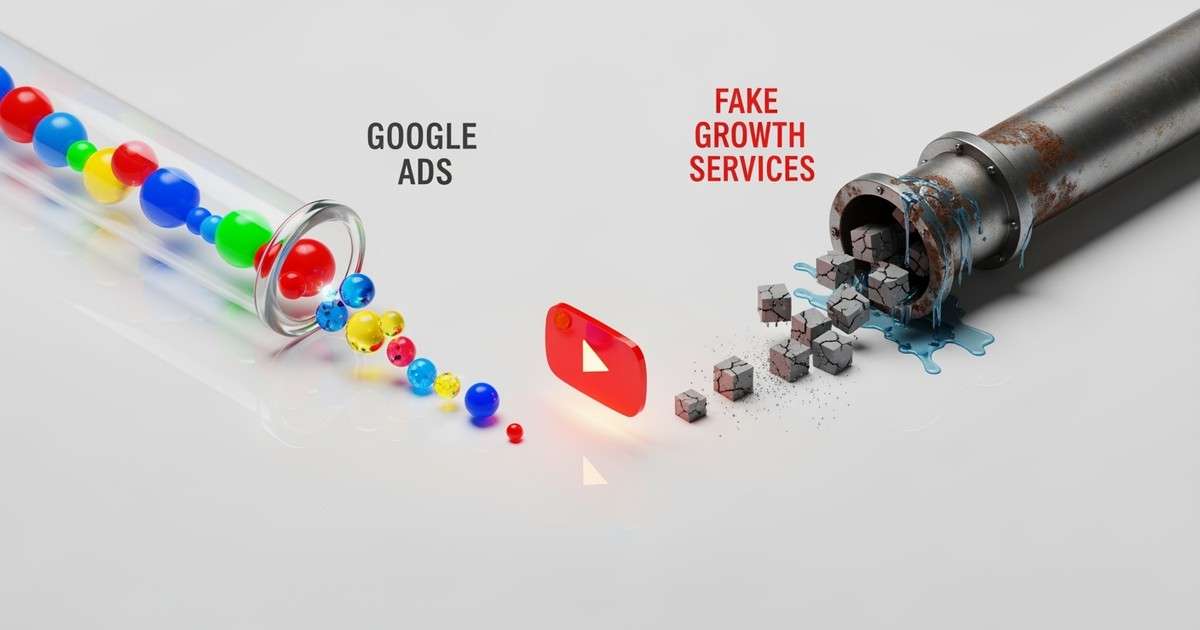
Tip Across Dynamoi campaigns, one paid click into a sequenced playlist generates 3-4 additional organic views on average (Dynamoi first-party data, aggregated). The autoplay rail carries viewers through your catalog automatically.
Yes, you can promote a YouTube playlist experience with ads. Run a video ad that lands viewers on the first video in a carefully sequenced playlist, so the watch page opens with the playlist rail and autoplay carries people through your catalog. For context on how this fits into a broader YouTube growth strategy, see The Complete Guide to YouTube Music Promotion.
What “promoting a playlist” really means
You do not upload a playlist as an ad creative. You promote a specific video, then design the landing experience so it opens inside a playlist. The viewer lands on that video’s watch page, sees the playlist rail, and the next video auto-advances. That is the core mechanic behind playlist-first growth.
Two key pieces make it work:
- The ad points to your playlist’s opener - the video you want every new viewer to start with.
- The playlist is tight and intentional - 10 to 20 related videos, clear ordering, strong first 15 seconds, and a consistent visual theme that keeps people watching.
What Is the Playlist-First Structure That Multiplies Views?
Think in sessions, not single views. Your opener should hook, your second and third videos should deepen interest, and your strongest social proof should sit early. Add end screens pointing to the playlist, a pinned comment with the playlist link, and a short description line that repeats it. This redundancy helps viewers enter or re-enter the sequence even if they break the chain.
Curate for momentum:
- 10 to 20 videos, 8 to 12 minutes each where possible.
- Keep metadata consistent - titles, thumbnails, and series naming.
- Place your best mid-video hook in the early slots to earn trust fast.
How to set it up in Google Ads
You will use a standard YouTube video campaign, then select the opener as your ad creative. For in-feed formats, clicks open the watch page of that video, where the playlist rail appears if the video is part of a public playlist. For in-stream formats, focus on creative and audience alignment so viewers who click through land on that same opener inside the playlist environment. See Google’s overview of video campaigns for current options and placements: About Video campaigns.
A quick view of the landing behavior:
| Ad format | Where the click lands | How to surface the playlist |
|---|---|---|
| In-feed video ad | Watch page of the ad video | Make the ad video the first item in a public playlist so the playlist rail shows |
| Skippable in-stream with “watch on YouTube” click | Watch page of the ad video | Same as above, plus include the playlist link in description and pinned comment |
| End screens and cards | In-video navigation | Add a playlist end screen element and a card to the playlist opener |
Tip - share and test the video’s URL while it sits inside the playlist to confirm the rail appears and that autoplay moves to the next item.
Why this improves AdSense revenue
Music RPM in the US averages roughly $3 per 1,000 views. On a single video, that is not enough to offset ad spend. The playlist changes the math: when a viewer watches four videos from one paid click at roughly $0.03, you generate AdSense revenue across the entire session instead of a single video. Longer sessions also create more mid-roll opportunities and teach YouTube that your content satisfies similar viewers, which feeds the recommendation engine.
This is why YouTube is the only major platform where ad spend can start paying itself back almost immediately. On Spotify, you spend now and wait months for royalty payouts. On YouTube, AdSense revenue shows up within the same billing cycle. A common concern is whether YouTube ads hurt your channel's algorithm. In-feed ads avoid this problem because the viewer is already on YouTube in a browsing session, so the engagement signal looks natural to the algorithm.
The goal is not raw paid views. It is paid discovery that converts into organic sessions.
How Does Measurement and Attribution Work With Dynamoi?
Dynamoi’s backend integrates with the Google Ads API and YouTube Analytics to attribute organic views back to the originating campaign.
We track uplift in session length, average views per viewer, and playlist progression, then tune targeting and creative to maximize cash back via AdSense while compounding organic reach.
We cannot guarantee outcomes, but the system is designed to spend only where we see real session growth and attributable organic lift.
What we optimize for:
- Higher average views per session from paid entries.
- Retention through the first three playlist items.
- RPM and AdSense yield per paid session, not just cost per view.
Related
Whether YouTube ad views count toward watch time and monetization depends on the ad format. If you want the campaign structure, playlist curation, targeting, and attribution wired end to end, we run it for artists and labels inside Dynamoi.