
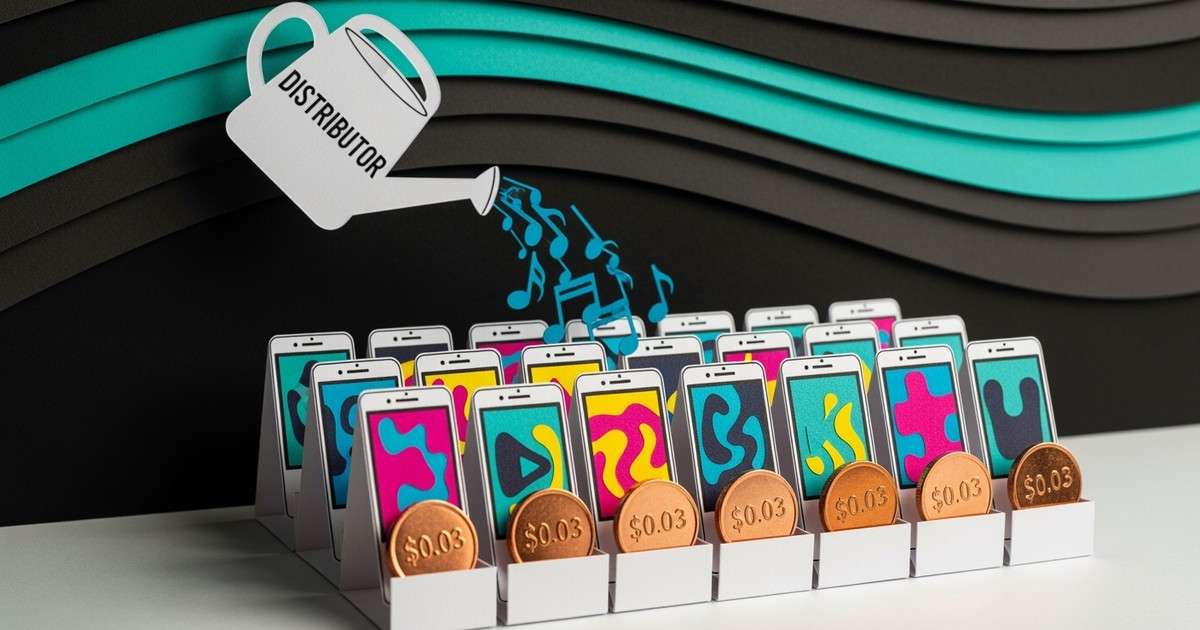
TikTok pays royalties to music rights holders, but the payment model differs from Spotify or Apple Music. Understanding this model changes how you evaluate TikTok campaign success.
How Does TikTok's Payment Model Work?
TikTok has transitioned from a video-creation-based model to a view-based royalty system. The per-video payout model has been fully deprecated.
How It Works Now
TikTok pays based on qualified streams of videos using your sound. This is similar to how Spotify and Apple Music calculate royalties, though rates are significantly lower.
Actual rates (Dynamoi's first-party streaming data):
| Period | Rate per 1,000 Streams |
|---|---|
| 2024 average | $0.003-0.011 |
| 2025 (Jan-Aug) | $0.007-0.013 |
This means:
- 1 million streams across videos using your sound = approximately $7-13
- Stream count matters more than video creation count
- A single viral video generates more royalties than many low-view videos
Premium Content Generator (PCG) Status
Starting November 1, 2024, TikTok introduced enhanced rates for Premium Content Generator content. PCG status generally applies to official artist uploads distributed through licensed aggregators with enhanced metadata. Check with your distributor to confirm if your catalog qualifies.
Note: TikTok Music (the separate subscription streaming service) shut down worldwide on November 28, 2024. All royalties now flow through the main TikTok app.
What Are the Collection Requirements?
TikTok only pays royalties for music delivered through licensed distributors with TikTok agreements. This includes DistroKid, TuneCore, CD Baby, Ditto Music, UnitedMasters, AWAL, and most other established distributors.
Critical: Uploading audio directly to TikTok via the app (as "Original Audio") generates zero royalties. The sound must be delivered through your distributor to be eligible for payments.
What Is the Payment Timeline?
Royalties are disbursed quarterly through your distributor. Typical timeline:
- Videos created using your sound in Q1
- TikTok reports to your distributor in late Q2
- Distributor processes and pays in Q2 or Q3
- Artist receives payment through normal distributor payout cycle
Expect 3-6 months between video creation and royalty receipt.
What Is the SoundOn Alternative?
TikTok operates its own distribution platform called SoundOn, which offers different terms:
| Factor | Traditional Distributor | SoundOn |
|---|---|---|
| TikTok royalty share | Varies (typically 80-100%) | 100% year 1, 90% after |
| DSP royalty share | 80-100% | 90% |
| Upfront fee | $0-50/year | Free |
| TikTok integration | Standard | Direct (potentially faster) |
SoundOn's value proposition: higher TikTok royalty retention and direct platform integration. The tradeoff is a 10% cut on DSP royalties (Spotify, Apple Music, etc.) and optimization for TikTok over global DSP reach.
Hybrid approach: Some artists use SoundOn for TikTok specifically and a separate distributor for other platforms. SoundOn agreements are non-exclusive, making this possible.
What About Instagram Reels?
Instagram Reels does not pay creators for music usage in the same way. Instagram has licensing agreements with labels and publishers, but payments go to rights holders through different channels (typically through PROs and publishers, not directly to artists through distributors).
TikTok's direct-to-distributor payment model is unique among short-form video platforms.
How Should You Maximize TikTok Royalties?
Since payment is now view-based, your strategy should focus on both sound adoption (more videos = more potential views) and content quality (videos that get watched generate more royalties). Create content formats that others want to replicate with high watch-through rates. Make clips easy to use with clear hooks and natural edit points. Engage with creators who use your sound through duets and reactions. Track metrics through TikTok for Artists to understand what drives both adoption and views.
A successful TikTok campaign generates both streaming conversion (through "Add to Music App") and direct TikTok royalties (through views on videos using your sound). The two often correlate - content that keeps viewers watching is also content that converts to DSP streams.
What Are Realistic Revenue Expectations?
TikTok royalties rarely represent significant income for most artists.
Based on Dynamoi's first-party streaming data:
- 1 million total streams on videos using your sound = approximately $7-13
- 10 million streams = approximately $70-130
- These numbers are roughly 30-50x lower than equivalent Spotify streams
Why it still matters:
Think of TikTok royalties as a bonus layer on top of the platform's primary value: discovery and streaming conversion. The real money is in the Spotify and Apple Music plays that TikTok virality drives. A song that generates 10 million TikTok streams might earn $100 in TikTok royalties but drive $3,000+ in DSP streaming revenue.