
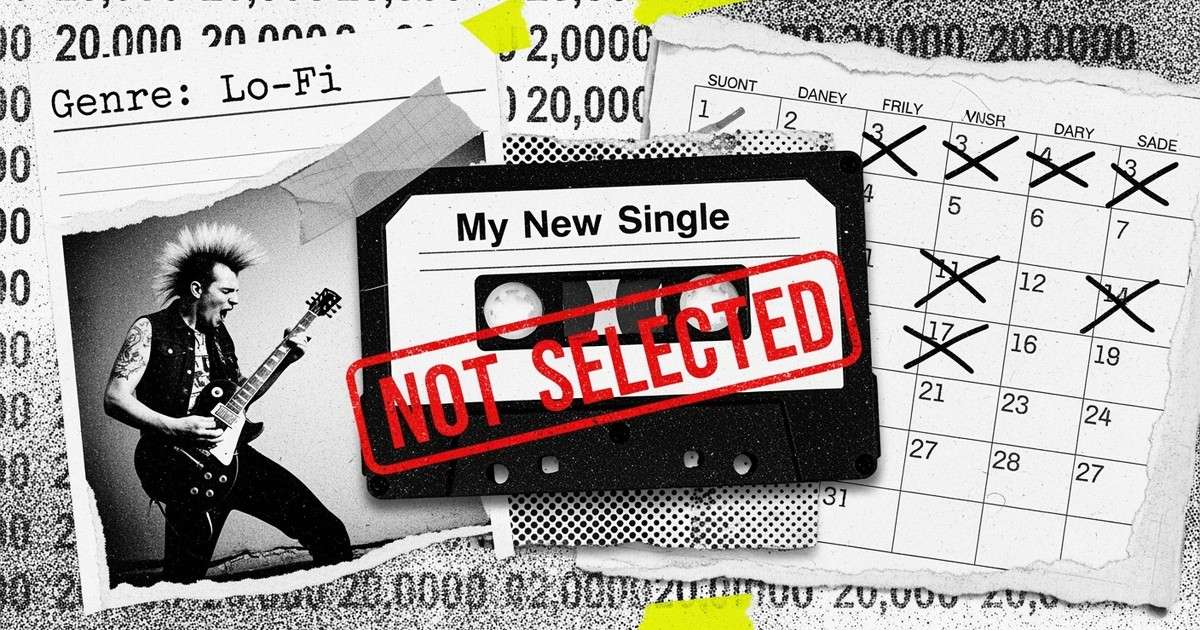
Spotify doesn't provide feedback on rejected pitches. You'll see "Not selected for editorial playlists" with no explanation. But rejection rarely means your music is bad. Understanding the common reasons can help you improve future submissions.
What "Not Selected" Actually Means
The editorial team receives approximately 20,000 pitch submissions daily. Even if every editor worked around the clock, they couldn't review everything thoroughly.
"Not selected" could mean:
- The editor's relevant playlist is full
- Similar songs were already scheduled
- The sonic fit wasn't right for current playlist direction
- Your pitch didn't stand out among thousands
- Timing didn't align with editorial calendar
- The editor simply didn't get to your submission
Rejection is not a verdict on your music's quality. It's a filtering outcome in an overwhelmed system.
What Are the Common Rejection Reasons?
Poor Genre Tagging
Mislabeling your genre routes your pitch to the wrong editor. A pop-punk song tagged as "Lo-Fi" goes to someone who doesn't curate that sound. They skip it immediately.
Fix: Be specific and accurate. "Indie Pop" beats "Pop." Match the track, not aspirational placement.
Vague Pitch Description
Generic descriptions blend into thousands of similar submissions.
Weak: "This is my most personal song yet. I hope people connect with it."
Strong: "Dark synth-pop for fans of The Weeknd and Dua Lipa. 890K TikTok views on the preview. $3K Meta campaign launching day one."
Fix: Lead with metrics, comparisons, and concrete marketing plans.
Late Submission
Pitches submitted less than 7 days before release often miss the editorial review window entirely. Best practice is 4-6 weeks.
Fix: Plan releases further in advance. Upload to your distributor early.
No Marketing Plan
Editors want to add songs that will perform well. If you can't articulate how you'll promote the release, they have no reason to believe it will succeed on their playlist.
Fix: Specify ad budgets, PR coverage, tour dates, influencer partnerships.
Already-Released Music
You cannot pitch tracks that are already out on Spotify. If you forgot to pitch before release, that opportunity is gone.
Fix: Build pitching into your release checklist. Never release without submitting first.
What Doesn't Affect Selection
Spotify has explicitly stated that these factors don't determine editorial decisions:
- Number of followers or monthly listeners
- Whether you're signed to a label
- Radio play or blog coverage
- Previous playlist history
Editors claim to evaluate each song independently. In practice, credibility signals (metrics, collaborators, marketing) clearly help, but follower count alone doesn't disqualify or qualify you.
How Should You Improve Future Pitches After Rejection?
After a rejection:
- Review your pitch description. Was it specific? Did it lead with strength?
- Check your genre tags. Were they accurate and specific?
- Evaluate timing. Did you submit with enough lead time?
- Assess the track honestly. Is it playlist-ready, or does it need production polish?
- Consider the competition. In your genre, what's getting playlisted? How does your track compare?
What Is the Numbers Reality for Pitch Acceptance Rates?
Spotify has claimed that about 20% of pitched tracks get added to editorial playlists. With ~100,000 new tracks uploaded daily and thousands of those being pitched, the acceptance rate for independent artists without label backing is likely below 5%.
Most artists pitch many singles before landing an editorial placement. Rejection is the norm, not the exception. Persistence matters.
What You Still Get
Even without editorial selection, pitching 7+ days before release guarantees your track appears in your followers' Release Radar. This algorithmic placement can generate meaningful streams and trigger further recommendations.
The pitch is never wasted, even when the answer is no.