
TikTok Organic Growth Strategy for Artists (2025) | Dynamoi
How-to Guide
How-to Guide
•
Updated
TikTok Organic Growth Strategy for Artists (2025)
Paid campaigns amplify momentum, not create it. Learn clip selection, posting cadence, content formats, and Sound Page optimization for organic TikTok growth.
TikTok organic growth does not happen by accident. It happens when you understand how the algorithm evaluates content, structure your clips for maximum engagement, and post consistently enough to trigger algorithmic distribution.
This guide covers what actually works for artists building TikTok presence from scratch - no paid amplification, no creator networks, just you and your phone.
How the Algorithm Evaluates Your Content
TikTok does not care about your follower count. It evaluates each video independently based on engagement signals from small initial audiences. If those signals are positive, the video gets pushed to larger audiences. If not, it dies.
Primary Signals
Signal
What It Measures
Why It Matters
Watch time
How long users watch before scrolling
Primary indicator of content quality
Completion rate
Percentage who watch to the end
Determines initial distribution tier
Replays
Users watching multiple times
Strong positive signal, especially for music
Shares
Users sending to friends
Viral coefficient multiplier
Comments
Users engaging with content
Community engagement indicator
Video creations
Users making videos with your sound
Most important signal for music
For music specifically, video creations are the metric that matters most. A video that inspires others to create content using your sound triggers algorithmic amplification in a way that likes and comments do not.
The Distribution Curve
Every video starts with a small test audience (typically 200-500 views). Performance in this window determines next steps:
Poor performance: Video stops being shown
Average performance: Video reaches a few thousand views
Strong performance: Video enters broader distribution, potentially reaching millions
The first 30-60 minutes after posting are critical. Front-load your most engaging content and post when your target audience is active.
Clip Selection
Most artists default to using their chorus. This is often wrong. The most TikTok-friendly moment in your track is the one that works best in 15-30 seconds of isolation.
What Makes a Clip Work
The catchiest moment must arrive in the first 3 seconds - TikTok users scroll if they are not grabbed instantly. Beyond that immediate hook, successful clips trigger an emotional response: nostalgia, humor, drama, surprise, or catharsis. Something that makes viewers feel something.
Repeatability matters because many TikTok videos autoplay multiple times. The clip should sound good on loop without becoming grating. Clear start and end points help other creators clip your sound easily into their content.
Lyrical hooks drive adoption. Memorable phrases, quotable lines, or relatable sentiments become captions and audio backdrops. The clips that trend are the ones people want to put their own content on top of.
Common Clip Mistakes
Building to the hook is the most common mistake. If your hook arrives at second 8, you have lost 80% of potential viewers who scrolled past. Instrumental-only sections also underperform - unless exceptionally distinctive, vocals drive engagement.
The clip needs to work without context. No "wait for it" buildups. No moments that only make sense if you know the full song. And be realistic about energy: slow, atmospheric tracks rarely go viral. TikTok favors momentum and forward motion.
Testing Clips
Before committing to a clip for your campaign:
Post 3-5 organic videos using different 15-second sections
Use identical non-musical content (same visual format)
Compare completion rates and engagement
The clip with highest completion rate is your campaign clip
Sound Page Optimization
Your Sound Page is the conversion point between TikTok engagement and streaming intent. Optimize it.
Metadata Check
Verify through TikTok for Artists:
Artist name displays correctly
Track title is accurate
Artwork appears properly
"Add to Music App" button is functional
Metadata errors are common with distributor delivery. Check within 48 hours of release and contact your distributor if anything is wrong.
Driving Sound Page Traffic
Every video caption should reference your music. Try "New track [title] out now - link in bio" or "POV: you discovered your new favorite song" or a direct call-to-action to tap the sound icon. Do not assume viewers will discover your Sound Page organically. Direct them there.
Encouraging Video Creations
Video creations are the most valuable metric for algorithmic amplification. Create a simple format others can replicate, issue explicit "make a video with this sound" challenges, and duet or react to users who create content with your sound. Feature user-generated content on your profile to signal that participation is valued.
The goal is to make your sound feel like a trend people want to participate in, not just a track to listen to.
Hashtag Strategy
Hashtags on TikTok matter less than on Instagram, but they still contribute to discovery.
Categories to Include
From Organic to Paid
Organic success signals when to invest in paid amplification:
Completion rates consistently above 40%
Video creations increasing without paid support
Positive streaming correlation
When these signals appear, you have content worth amplifying. Use Spark Ads to boost your best-performing organic posts. The organic performance validates the creative - paid spend scales the reach.
Attempting to skip organic validation with immediate paid spend usually wastes money. The algorithm does not care that you paid; it still evaluates engagement signals. Bad content fails regardless of budget behind it.
•
Updated
TikTok Organic Growth Strategy for Artists (2025)
Paid campaigns amplify momentum, not create it. Learn clip selection, posting cadence, content formats, and Sound Page optimization for organic TikTok growth.
TikTok organic growth does not happen by accident. It happens when you understand how the algorithm evaluates content, structure your clips for maximum engagement, and post consistently enough to trigger algorithmic distribution.
This guide covers what actually works for artists building TikTok presence from scratch - no paid amplification, no creator networks, just you and your phone.
How the Algorithm Evaluates Your Content
TikTok does not care about your follower count. It evaluates each video independently based on engagement signals from small initial audiences. If those signals are positive, the video gets pushed to larger audiences. If not, it dies.
Primary Signals
Signal
What It Measures
Why It Matters
Watch time
How long users watch before scrolling
Primary indicator of content quality
Completion rate
Percentage who watch to the end
Determines initial distribution tier
Replays
Users watching multiple times
Strong positive signal, especially for music
Shares
Users sending to friends
Viral coefficient multiplier
Comments
Users engaging with content
Community engagement indicator
Video creations
Users making videos with your sound
Most important signal for music
For music specifically, video creations are the metric that matters most. A video that inspires others to create content using your sound triggers algorithmic amplification in a way that likes and comments do not.
The Distribution Curve
Every video starts with a small test audience (typically 200-500 views). Performance in this window determines next steps:
Poor performance: Video stops being shown
Average performance: Video reaches a few thousand views
Strong performance: Video enters broader distribution, potentially reaching millions
The first 30-60 minutes after posting are critical. Front-load your most engaging content and post when your target audience is active.
Clip Selection
Most artists default to using their chorus. This is often wrong. The most TikTok-friendly moment in your track is the one that works best in 15-30 seconds of isolation.
What Makes a Clip Work
The catchiest moment must arrive in the first 3 seconds - TikTok users scroll if they are not grabbed instantly. Beyond that immediate hook, successful clips trigger an emotional response: nostalgia, humor, drama, surprise, or catharsis. Something that makes viewers feel something.
Repeatability matters because many TikTok videos autoplay multiple times. The clip should sound good on loop without becoming grating. Clear start and end points help other creators clip your sound easily into their content.
Lyrical hooks drive adoption. Memorable phrases, quotable lines, or relatable sentiments become captions and audio backdrops. The clips that trend are the ones people want to put their own content on top of.
Common Clip Mistakes
Building to the hook is the most common mistake. If your hook arrives at second 8, you have lost 80% of potential viewers who scrolled past. Instrumental-only sections also underperform - unless exceptionally distinctive, vocals drive engagement.
The clip needs to work without context. No "wait for it" buildups. No moments that only make sense if you know the full song. And be realistic about energy: slow, atmospheric tracks rarely go viral. TikTok favors momentum and forward motion.
Testing Clips
Before committing to a clip for your campaign:
Post 3-5 organic videos using different 15-second sections
Use identical non-musical content (same visual format)
Compare completion rates and engagement
The clip with highest completion rate is your campaign clip
Sound Page Optimization
Your Sound Page is the conversion point between TikTok engagement and streaming intent. Optimize it.
Metadata Check
Verify through TikTok for Artists:
Artist name displays correctly
Track title is accurate
Artwork appears properly
"Add to Music App" button is functional
Metadata errors are common with distributor delivery. Check within 48 hours of release and contact your distributor if anything is wrong.
Driving Sound Page Traffic
Every video caption should reference your music. Try "New track [title] out now - link in bio" or "POV: you discovered your new favorite song" or a direct call-to-action to tap the sound icon. Do not assume viewers will discover your Sound Page organically. Direct them there.
Encouraging Video Creations
Video creations are the most valuable metric for algorithmic amplification. Create a simple format others can replicate, issue explicit "make a video with this sound" challenges, and duet or react to users who create content with your sound. Feature user-generated content on your profile to signal that participation is valued.
The goal is to make your sound feel like a trend people want to participate in, not just a track to listen to.
Hashtag Strategy
Hashtags on TikTok matter less than on Instagram, but they still contribute to discovery.
Categories to Include
From Organic to Paid
Organic success signals when to invest in paid amplification:
Completion rates consistently above 40%
Video creations increasing without paid support
Positive streaming correlation
When these signals appear, you have content worth amplifying. Use Spark Ads to boost your best-performing organic posts. The organic performance validates the creative - paid spend scales the reach.
Attempting to skip organic validation with immediate paid spend usually wastes money. The algorithm does not care that you paid; it still evaluates engagement signals. Bad content fails regardless of budget behind it.
Content Formats That Work
Performance Clips
Direct performance of your music - singing, rapping, or playing an instrument. Use vertical framing that fills the screen, good audio quality (your actual track, not a live recording), and maintain eye contact with the camera. Match your energy to the track.
Performance clips work best for new releases, establishing your sound with new audiences, and building artist connection. They put a face to the music.
Behind-the-Scenes
Studio sessions, writing process, production moments. The key is authenticity - raw and unpolished beats staged "creativity" every time. Show real process, include audio of the track being worked on, and keep clips brief (15-30 seconds, not mini-documentaries).
Use behind-the-scenes content for pre-release hype, humanizing your artist brand, and engaging existing fans who want to see how the music gets made.
Trend Participation
Using trending formats or concepts with your music. Speed matters here - trends have 48-72 hour windows before they saturate. Put your spin on the format rather than copying exactly, and only participate if your music genuinely fits the trend's vibe. Forced trend participation reads as desperate.
This format works for discovery, reaching new audiences, and staying algorithmically relevant.
Reaction/Commentary
Responding to comments, reacting to others using your sound, engaging with music discourse. Keep reactions authentic rather than scripted, engage with real comments and real videos, use your music as background audio, and stay brief and punchy.
Reaction content builds community, encourages video creations (when you feature users who made content with your sound), and maintains engagement between releases.
Lyric Visualization
Text on screen with your audio. Use clean, readable typography with timing synced to vocals. The background should be visually interesting (not just a black screen), and highlight the most memorable line.
This format emphasizes hooks, remains accessible to users browsing with sound off, and works especially well for quotable lyrics that double as captions.
Sound vs. Original Audio
This distinction is critical and frequently misunderstood.
Official Sound
When you use your track's Official Sound (the version distributed through your aggregator to TikTok):
Video appears on your Sound Page
Other creators can find and use your sound
Video creations are tracked and contribute to algorithmic signals
Royalties are generated for sound usage
Original Audio
When you upload a video with Original Audio (the default for videos with new audio):
Video creates a new sound attached only to your video
Others cannot easily find or use your track
No Sound Page aggregation
No royalty generation
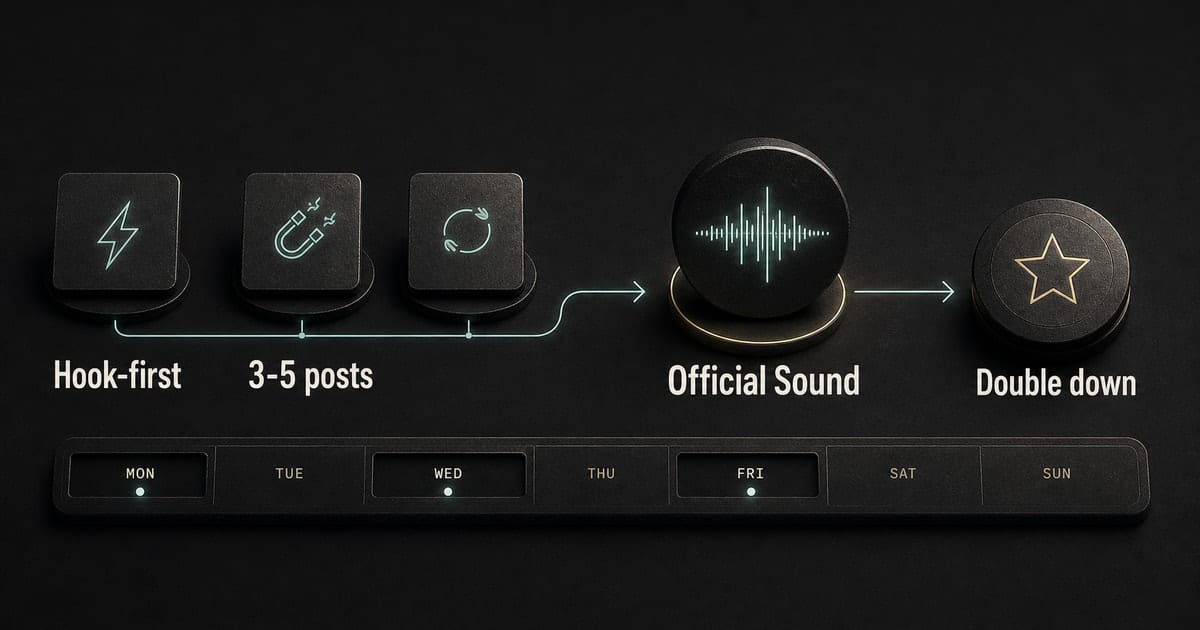
Always use your Official Sound on your own content. Every video you post should contribute to your Sound Page metrics.
How to Use Official Sound
Post your track through your distributor to TikTok
Wait 24-48 hours for the sound to be available
When creating videos, search for your track in "Add Sound"
Select the official distributed version, not a screen recording or upload
If your sound is not appearing, check with your distributor. TikTok delivery can lag behind Spotify/Apple Music by several days.
Posting Cadence
Frequency
The algorithm rewards consistency more than volume.
Posting Rate
Sustainability
Algorithm Signal
7+ per day
Unsustainable, quality suffers
Potentially flagged as spam
1-2 per day
Sustainable for dedicated creators
Strong consistent signal
3-5 per week
Sustainable for most artists
Healthy signal
1-2 per week
Minimal effort
Weak signal, slow growth
Recommended: 3-5 posts per week for most artists. More if you can maintain quality.
Timing
Post when your target audience is active. General guidelines:
TikTok Pro (free) provides audience analytics showing when your followers are most active. Use this data over general guidelines once you have it.
Content Calendar Structure
Weekly template:
Day
Content Type
Objective
Monday
Performance clip
Showcase music
Wednesday
Behind-the-scenes
Build connection
Friday
New/trending format
Discovery reach
Saturday
Engagement (duet/react)
Community building
Adjust based on what performs for your specific audience.
Include a mix of genre hashtags (#indiemusic, #newrap, #rnb, #countrymusic), discovery hashtags (#newmusic, #newartist, #unsigned, #underrated), whatever is currently trending (check the Discover page), and niche community-specific tags for your subgenre.
Use 3-5 relevant hashtags per post. Stuffing 30 hashtags looks desperate and does not improve performance. A typical set might look like: #newmusic #indieartist #singersongwriter #fyp.
FYP Hashtag
The #fyp (For You Page) hashtag has no proven algorithmic benefit. Including it does not hurt, but do not rely on it for discovery. Content quality determines FYP placement, not hashtags.
Common Organic Growth Mistakes
Posting and Abandoning
Posting a video and immediately moving on wastes the crucial first-hour window. Engage with comments, respond to viewers, stay active on the platform. The algorithm notices.
Over-Polishing Content
Professional-quality music videos often underperform raw, authentic content. TikTok users are trained to scroll past anything that looks like an ad. Native-feeling content wins.
Inconsistent Presence
Posting five videos in one day then disappearing for two weeks confuses the algorithm and loses audience momentum. Consistent moderate posting beats sporadic bursts.
Ignoring Analytics
TikTok Pro provides free analytics on video performance, audience demographics, and optimal posting times. Ignoring this data means guessing when you could know.
Single Format Dependency
If you only post performance clips and performance clips stop working, you are stuck. Test multiple formats and develop competency in several.
Chasing Virality
Viral moments are rare and often random. Sustainable growth comes from consistent good performance, not hoping for a lottery win. Build a content engine that works at 10K views, not a strategy that requires 1M views to matter.
Measuring Organic Success
Video-Level Metrics
Metric
Good Performance
Great Performance
Completion rate
40%+
60%+
Engagement rate
5%+
10%+
Shares
1% of views
3%+ of views
Sound-Level Metrics
Metric
Growing Momentum
Strong Momentum
Weekly video creations
Increasing week-over-week
100+ per week
Sound Page visits
Increasing week-over-week
Correlates with content spikes
Add to Music App
Any consistent flow
5%+ of Sound Page visits
Cross-Platform Metrics
The ultimate measure of TikTok organic success is streaming conversion:
Healthy conversion rate: 0.5-2% of TikTok views translating to new DSP streams within 7 days.
If your TikTok engagement is growing but streaming is flat, the funnel is broken somewhere. Check that your Official Sound is properly linked, that "Add to Music App" works, and that the track delivers on the promise of the clip.
Content Formats That Work
Performance Clips
Direct performance of your music - singing, rapping, or playing an instrument. Use vertical framing that fills the screen, good audio quality (your actual track, not a live recording), and maintain eye contact with the camera. Match your energy to the track.
Performance clips work best for new releases, establishing your sound with new audiences, and building artist connection. They put a face to the music.
Behind-the-Scenes
Studio sessions, writing process, production moments. The key is authenticity - raw and unpolished beats staged "creativity" every time. Show real process, include audio of the track being worked on, and keep clips brief (15-30 seconds, not mini-documentaries).
Use behind-the-scenes content for pre-release hype, humanizing your artist brand, and engaging existing fans who want to see how the music gets made.
Trend Participation
Using trending formats or concepts with your music. Speed matters here - trends have 48-72 hour windows before they saturate. Put your spin on the format rather than copying exactly, and only participate if your music genuinely fits the trend's vibe. Forced trend participation reads as desperate.
This format works for discovery, reaching new audiences, and staying algorithmically relevant.
Reaction/Commentary
Responding to comments, reacting to others using your sound, engaging with music discourse. Keep reactions authentic rather than scripted, engage with real comments and real videos, use your music as background audio, and stay brief and punchy.
Reaction content builds community, encourages video creations (when you feature users who made content with your sound), and maintains engagement between releases.
Lyric Visualization
Text on screen with your audio. Use clean, readable typography with timing synced to vocals. The background should be visually interesting (not just a black screen), and highlight the most memorable line.
This format emphasizes hooks, remains accessible to users browsing with sound off, and works especially well for quotable lyrics that double as captions.
Sound vs. Original Audio
This distinction is critical and frequently misunderstood.
Official Sound
When you use your track's Official Sound (the version distributed through your aggregator to TikTok):
Video appears on your Sound Page
Other creators can find and use your sound
Video creations are tracked and contribute to algorithmic signals
Royalties are generated for sound usage
Original Audio
When you upload a video with Original Audio (the default for videos with new audio):
Video creates a new sound attached only to your video
Others cannot easily find or use your track
No Sound Page aggregation
No royalty generation
Always use your Official Sound on your own content. Every video you post should contribute to your Sound Page metrics.
How to Use Official Sound
Post your track through your distributor to TikTok
Wait 24-48 hours for the sound to be available
When creating videos, search for your track in "Add Sound"
Select the official distributed version, not a screen recording or upload
If your sound is not appearing, check with your distributor. TikTok delivery can lag behind Spotify/Apple Music by several days.
Posting Cadence
Frequency
The algorithm rewards consistency more than volume.
Posting Rate
Sustainability
Algorithm Signal
7+ per day
Unsustainable, quality suffers
Potentially flagged as spam
1-2 per day
Sustainable for dedicated creators
Strong consistent signal
3-5 per week
Sustainable for most artists
Healthy signal
1-2 per week
Minimal effort
Weak signal, slow growth
Recommended: 3-5 posts per week for most artists. More if you can maintain quality.
Timing
Post when your target audience is active. General guidelines:
TikTok Pro (free) provides audience analytics showing when your followers are most active. Use this data over general guidelines once you have it.
Content Calendar Structure
Weekly template:
Day
Content Type
Objective
Monday
Performance clip
Showcase music
Wednesday
Behind-the-scenes
Build connection
Friday
New/trending format
Discovery reach
Saturday
Engagement (duet/react)
Community building
Adjust based on what performs for your specific audience.
Include a mix of genre hashtags (#indiemusic, #newrap, #rnb, #countrymusic), discovery hashtags (#newmusic, #newartist, #unsigned, #underrated), whatever is currently trending (check the Discover page), and niche community-specific tags for your subgenre.
Use 3-5 relevant hashtags per post. Stuffing 30 hashtags looks desperate and does not improve performance. A typical set might look like: #newmusic #indieartist #singersongwriter #fyp.
FYP Hashtag
The #fyp (For You Page) hashtag has no proven algorithmic benefit. Including it does not hurt, but do not rely on it for discovery. Content quality determines FYP placement, not hashtags.
Common Organic Growth Mistakes
Posting and Abandoning
Posting a video and immediately moving on wastes the crucial first-hour window. Engage with comments, respond to viewers, stay active on the platform. The algorithm notices.
Over-Polishing Content
Professional-quality music videos often underperform raw, authentic content. TikTok users are trained to scroll past anything that looks like an ad. Native-feeling content wins.
Inconsistent Presence
Posting five videos in one day then disappearing for two weeks confuses the algorithm and loses audience momentum. Consistent moderate posting beats sporadic bursts.
Ignoring Analytics
TikTok Pro provides free analytics on video performance, audience demographics, and optimal posting times. Ignoring this data means guessing when you could know.
Single Format Dependency
If you only post performance clips and performance clips stop working, you are stuck. Test multiple formats and develop competency in several.
Chasing Virality
Viral moments are rare and often random. Sustainable growth comes from consistent good performance, not hoping for a lottery win. Build a content engine that works at 10K views, not a strategy that requires 1M views to matter.
Measuring Organic Success
Video-Level Metrics
Metric
Good Performance
Great Performance
Completion rate
40%+
60%+
Engagement rate
5%+
10%+
Shares
1% of views
3%+ of views
Sound-Level Metrics
Metric
Growing Momentum
Strong Momentum
Weekly video creations
Increasing week-over-week
100+ per week
Sound Page visits
Increasing week-over-week
Correlates with content spikes
Add to Music App
Any consistent flow
5%+ of Sound Page visits
Cross-Platform Metrics
The ultimate measure of TikTok organic success is streaming conversion:
Healthy conversion rate: 0.5-2% of TikTok views translating to new DSP streams within 7 days.
If your TikTok engagement is growing but streaming is flat, the funnel is broken somewhere. Check that your Official Sound is properly linked, that "Add to Music App" works, and that the track delivers on the promise of the clip.