
How Editorial Pitching Works
Each major streaming platform handles playlist submissions differently. Some democratize access; others gatekeep through distributors.
Spotify for Artists
Spotify remains the industry standard for direct artist pitching. Any artist with Admin or Editor access in Spotify for Artists can pitch one unreleased track per release.
The process:
- Select a focus track from your Upcoming tab
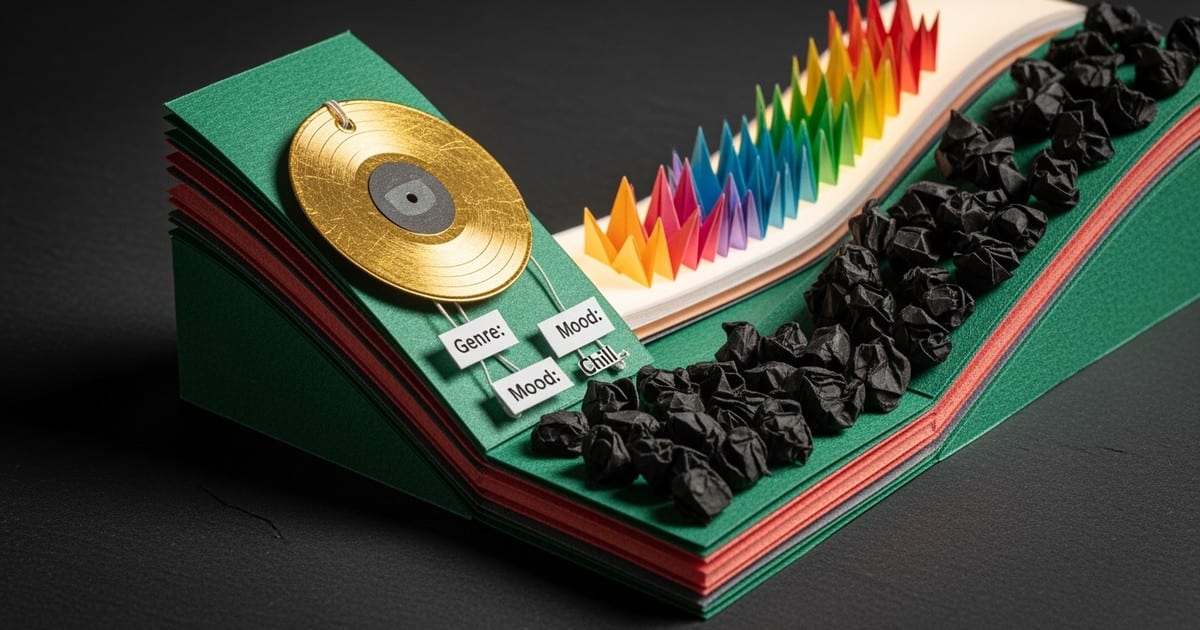
- Tag genres (up to 3), moods, styles, and instruments
- Write a 500-character pitch description
- Submit at least 7 days before release
Even if editors pass on your track, a valid pitch submitted 7+ days early guarantees placement in your followers' Release Radar. This alone makes pitching worthwhile.
What you cannot pitch:
- Already-released tracks
- Compilations
- Songs where you're only a featured artist
- More than one track per release
Apple Music
Apple operates on a relationship model. There is no public-facing pitch tool for independent artists comparable to Spotify for Artists.
Pitching happens through Apple Music Pitch, a tool accessible only to labels, distributors, and partners with iTunes Connect accounts. Independent artists must rely on their distributor to pitch on their behalf. Some distributors have enhanced access; most don't.
Lead time: 3-4 weeks minimum. Spatial Audio availability is a significant plus.
Amazon Music for Artists
Amazon offers flexibility that Spotify doesn't. The pitch tool lives in the Amazon Music for Artists app under "New Releases."
Key differences from Spotify:
- You can pitch up to 14 days after release (pre-release still recommended)
- 1,000-character description limit (double Spotify's)
- Pitching influences Alexa voice requests and Activity Feed visibility, not just playlists
Deezer
Deezer's pitching tool is restricted to Label and Provider accounts. Individual artists cannot access it directly. You'll need a distributor with a Deezer relationship or a label services company holding a Provider account.
Deadline: 7 days before release.
What Editorial Teams Actually Look For
Across all platforms, editors function less as pure tastemakers and more as validators of existing momentum.
Data Velocity
Editors watch for "reactive" tracks, songs already generating saves, low skip rates, and high completion rates from algorithmic sources or external traffic. A track with zero traction is a harder sell than one showing early signs of life.
Cultural Relevance
Is the artist growing on TikTok? Is there a tour? Editors prioritize tracks with a story happening off-platform. "We're running a $5K ad campaign and have PR coverage scheduled" beats "we hope this takes off."
Sonic Fit
For genre-specific playlists like RapCaviar or Lorem, the vibe and production quality must match that playlist's aesthetic. This is subjective but heavily influenced by current trends.
Platform Investment
Use of platform-specific features signals that you're an active partner. Spotify Canvas, Apple Motion Art, Amazon Hype Deck: these small investments show editors you're committed to their platform.
Common Rejection Reasons
Understanding why pitches fail helps you avoid the same mistakes.
Poor Metadata
Mislabeling a genre ensures your track goes to the wrong editor. Tag a pop-punk song as "Lo-Fi" and it gets skipped by someone who doesn't curate that sound. Be specific: don't just select "Pop" when "Indie Pop" or "Dream Pop" is more accurate.
Vague Marketing Plans
"I will post on Instagram" is insufficient. Editors look for concrete ad budgets, PR campaigns, influencer partnerships, or tour dates. Specificity signals seriousness.
Late Submission
Submitting less than 7 days before release often disqualifies a track entirely due to submission volume. Best practice: 4-6 weeks out.
Already Released
You cannot pitch music that's already out on Spotify. Amazon gives you a 14-day post-release window, but that's the exception.
The Numbers: Acceptance Rates and Reality
Spotify has historically claimed that about 20% of pitched tracks get playlisted. But with approximately 100,000 new tracks uploaded daily in 2024, the effective acceptance rate for editorial playlists is likely below 5% for independent artists without label backing.
Many artists report pitching dozens of singles with zero editorial placements. A "success" is often landing a niche genre list, not New Music Friday.
Factors that increase your chances:
| Factor | Why It Helps |
|---|---|
| High pre-saves | Signals audience is waiting, boosts day-one velocity |
| Consistent releases | Every 4-6 weeks keeps you in Release Radar rotation |
| Off-platform traffic | Ads, newsletter, TikTok driving streams spikes popularity score |
| Complete metadata | Accurate tags help algorithms and editors route correctly |
Editorial vs Algorithmic Playlists
Editorial playlists are human-curated: New Music Friday, RapCaviar, Today's Top Hits. Algorithmic playlists are generated for each listener: Discover Weekly, Release Radar, your personalized mixes.
Here's the counterintuitive truth: editorial playlists likely account for less than 2% of all Spotify streams. User-generated and algorithmic playlists dominate. The real value of editorial placement is the downstream algorithmic effect.
The feedback loop:
- Editorial placement generates listener data (who streams, who skips, who saves)
- Positive data triggers algorithmic recommendations (
Discover Weekly, Radio) - Algorithmic placement generates more data
- The cycle continues or dies based on track performance
This means a bad editorial placement can hurt you. If your track lands on a playlist where listeners skip it (bad fit), you generate negative data that kills algorithmic potential.
How Long Songs Stay on Playlists
Editorial playlist tenure varies by playlist type and performance:
- New Music Friday: Weekly refresh. Songs typically stay 1 week.
- Genre playlists: 2-4 weeks typical, longer if performance metrics stay strong
- Mood playlists: Can be longer if the track fits the utility (Focus, Sleep, etc.)
Release Radar features a track for up to 28 days after release. Discover Weekly placement is indefinite as long as engagement metrics hold.
The Paid Playlist Trap
This is where the industry gets murky, and where you can destroy your career with one bad decision.
Legitimate Services
Platforms like SubmitHub and Groover allow artists to pay curators for their time to listen and provide feedback. Placement is not guaranteed. This generally complies with Spotify's terms because payment is for the critique, not the stream.
Illegitimate Services
Any service guaranteeing a specific number of streams or playlist placement is a scam and a terms violation. These services often use bot farms to fulfill promises.
Why This Matters in 2026
In April 2024, Spotify implemented a policy charging labels and distributors a €10 penalty per track when "flagrant artificial streaming" is detected. Distributors pass these fines to artists and often ban accounts.
Using a shady playlisting service can now result in financial debt and catalog removal, not just a slap on the wrist. Learn more about artificial streaming penalties.
Our Position on Playlist Payola
Paying playlist curators for "consideration" is a form of payola. The payment creates incentive bias regardless of whether placement is "guaranteed." Listeners have no idea which songs reached them through paid submissions. This undermines organic discovery and disadvantages artists who can't pay.
We recommend focusing on legitimate editorial pitching through official platform tools and building real audiences through targeted advertising to genuine listeners.
Best Practices Summary
Timing
| Platform | Minimum | Recommended |
|---|---|---|
| Spotify | 7 days | 4-6 weeks |
| Apple Music | 3 weeks | 4 weeks |
| Amazon Music | Pre-release | 2-3 weeks |
| Deezer | 7 days | 2-3 weeks |
The Perfect Pitch
Start with the hook: "Viral on TikTok with 1M views" or "Supported by [Notable Artist]"
Add context: "For fans of Tame Impala and Mac DeMarco"
Show the plan: Bullet your marketing spend, PR coverage, tour dates
Avoid: Vague emotional descriptions without context, begging for placement
Metadata Checklist
- Specific genre tags (not just "Pop" but "Dream Pop")
- Accurate mood descriptors
- Correct instrument tagging
- Matching metadata across all platforms (composer credits, ISRC)
Recent Changes (2025-2026)
Spotify's 1,000-stream threshold: Tracks with fewer than 1,000 streams in the past 12 months no longer generate recording royalties (current Spotify rates). This affects emerging artists and makes early momentum more important.
Artificial streaming fines: The €10/track penalty has fundamentally changed the risk profile of paid promotion.
AI playlists: Spotify's "Prompted Playlist" feature lets users generate playlists via text prompts. This shifts discovery further toward AI and makes accurate metadata tagging even more vital.
Discovery Mode expansion: Artists can accept a lower royalty rate in exchange for algorithmic boost. This competes with editorial placement as a discovery tool.