

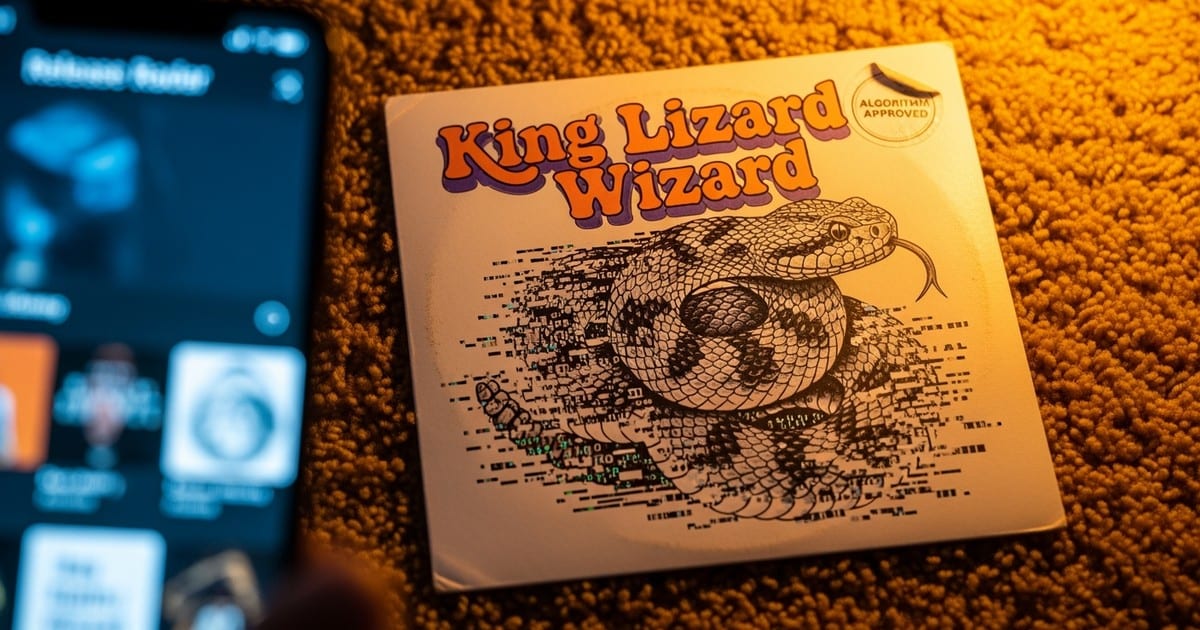
A fan opens Spotify, hits Release Radar, and sees a familiar title: "Rattlesnake" by King Lizard Wizard.
Same lyrics as the real King Gizzard & the Lizard Wizard song. Same vibe. Different "artist." And crucially, the real band pulled its catalog from Spotify back in July in protest over CEO Daniel Ek's investment in military AI company Helsing.
What that fan is hearing is almost certainly a generative-AI knockoff - an imposter act feeding King Gizzard's lyrics and aesthetic into a model, then uploading the results under a confusingly similar name. Every track on the "King Lizard Wizard" profile mirrors a real King Gizzard song title and uses the band's lyrics.
Redditors quickly flagged the release, calling it "a bad AI ripoff" and vowing to cancel their Spotify accounts. But by then, the damage was done: the fake had already been pushed into algorithmic recommendations meant to deepen fan loyalty.
The message to the wider industry is uncomfortable: if you leave a platform, AI will happily stay behind and pretend to be you.
Why this matters far beyond King Gizzard
This episode crystallizes three structural problems that every artist, label and manager now has to factor into strategy.
AI impersonation is a monetization strategy
The "King Lizard Wizard" playbook is simple: take an artist with a passionate fanbase, feed their catalog into a music model and generate close-enough soundalikes, upload tracks under a near-identical name, then let recommendation algorithms do the rest.
The goal isn't art - it's capture: siphoning streams, attention and playlist slots that would otherwise belong to the real act.
Platform trust is on the line
Spotify now has all three ingredients of a trust problem in one case study: a band that left on ethical grounds, an AI impersonator clearly abusing that absence, and algorithms that not only failed to catch the knockoff but actively recommended it.
Contrast that with iHeartMedia's recent "Guaranteed Human" pledge, which bans AI-generated DJs and requires on-air hosts to disclose that they're real people.
Boycotts without infrastructure can backfire
When King Gizzard left Spotify, their monthly listeners fell from about 1.1 million to under 60,000, while the AI impostor quietly amassed tens of thousands of monthly listeners on the same service.
The lesson isn't "never leave a DSP." It's that if you ask fans to move, you need serious infrastructure and communication to keep them with you.
The bottom line
King Gizzard's protest and the AI clones that rushed in behind them won't be the last story of this kind. They're simply the clearest early warning that in the age of generative audio, silence on a platform doesn't mean absence - it just creates a vacancy AI is happy to fill.