

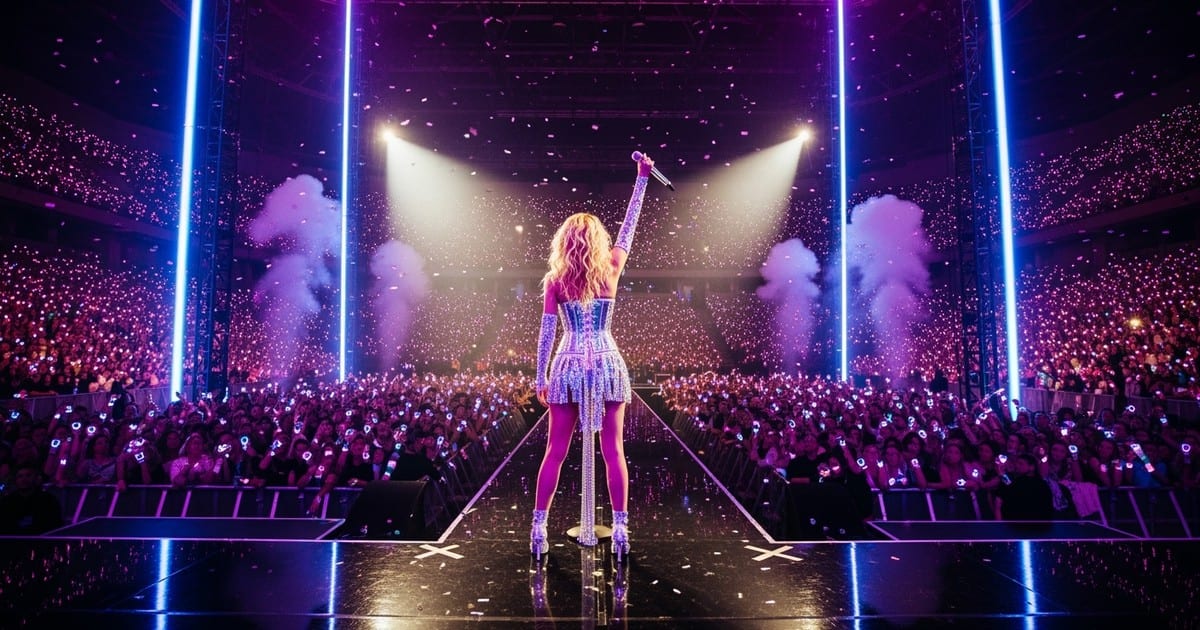
The superstar economy isn't just alive; it is running hotter than ever. AEG released full-year figures for London's The O2 Arena this week, revealing the venue's most successful year in history as of December 2025. The data paints a picture of a live sector operating at maximum velocity at the top end, even as the grassroots foundation shows cracks.
Breaking down the volume
The headline figures are staggering for a single facility. The O2 hosted 239 shows in 2025, a massive 19% increase year-over-year. That volume translated to 2.9 million tickets sold, an 11.4% rise from 2024.
For promoters and venue operators, the delta between show volume (up 19%) and ticket volume (up 11.4%) is the metric to watch. It suggests a strategy of aggressive calendar utilization—filling dark days with slightly smaller capacity events or diverse programming (comedy, e-sports) rather than relying solely on maximum-capacity sellouts every night. Despite this, The O2 secured the No. 1 spot on Billboard's year-end charts for attendance, validating London's role as a critical routing hub.
The Radiohead math
While volume drove the gross, creative configuration drove the density. Radiohead set a new venue attendance record during a four-night run, drawing 22,355 fans per night.
This figure exceeds the arena's standard listed capacity of 20,000. For production managers and agents, this is a masterclass in floor management and stage design. It proves that legacy alternative acts can generate "superstar" yield comparable to pop icons if the production configuration is optimized for density rather than spectacle.
Gen Z speed-runs the circuit
The most significant shift for A&R departments is the acceleration of career velocity. The report noted a 34% surge in first-time performers, totaling 55 new acts.
Key insight: The pipeline from TikTok virality to arena hard tickets is shortening. Artists like Sabrina Carpenter and Tate McRae are skipping traditional developmental steps, moving from theaters to multi-night arena sellouts in record time.
This isn't just about youth. The "throwback" economy is equally potent, with Pitbull making his debut as a headliner, capitalizing on Millennial nostalgia.
New global routing maps
The definition of a "World Tour" is finally expanding beyond Western strongholds. AEG reported the venue's first-ever performers from China, Singapore, and Turkey in 2025.
This signals a massive opportunity for agents to tap into diaspora spending power. C-Pop and T-Pop are no longer niche exports; they are filling Western arenas. Promoters who ignore these genres are leaving significant gross revenue on the table.
The pipeline paradox
Despite the champagne popping in North Greenwich, the ecosystem remains unbalanced. The report juxtaposes The O2's record year against data from industry body LIVE, which continues to flag the rapid closure of grassroots venues.
The risk: The industry is developing a "barbell" structure—heavy at the top, heavy at the bottom, but with a hollowed-out middle. While the O2 thrives today, the closure of small clubs threatens the supply chain of talent for 2030. If the nursery slopes close, the next Radiohead has nowhere to practice.
Operational future-proofing
Finally, the venue's shift to 100% renewable energy is a commercial necessity, not just a CSR initiative. With major touring acts increasingly auditing the carbon footprint of their routing, venues that cannot offer green power will eventually lose bids for top-tier tours. AEG has positioned The O2 to win these contracts by aligning operational costs with the sustainability mandates of modern artist riders.