

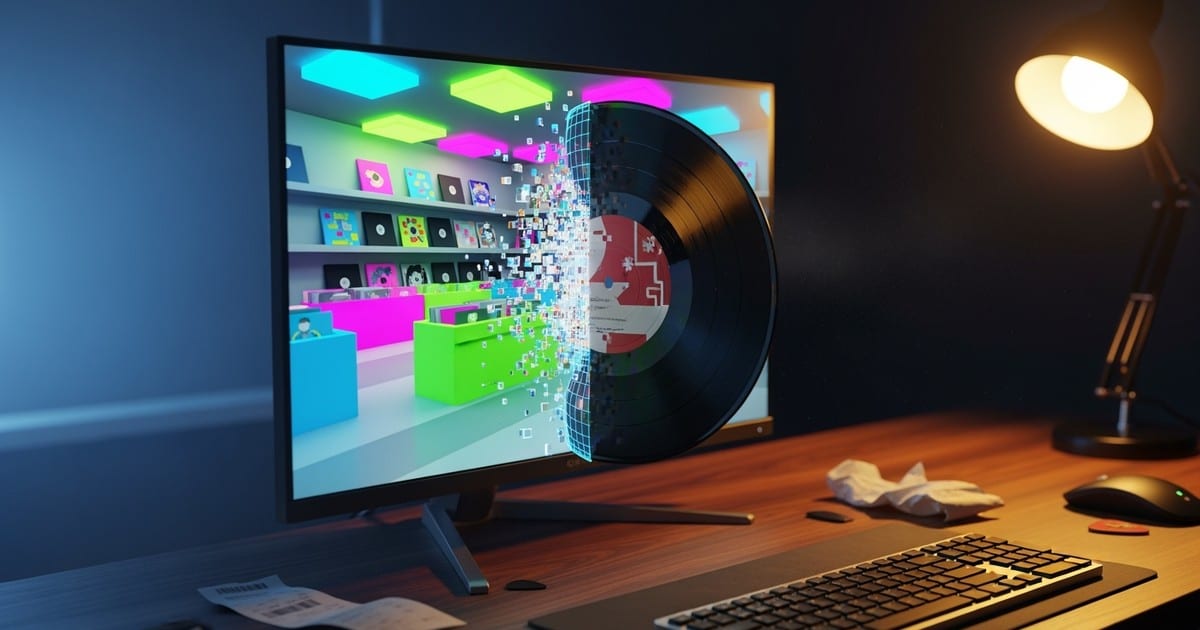
Universal Music Group (UMG) has finally stopped treating Roblox like a billboard and started treating it like a record store.
On December 19, 2025, the world’s largest rights holder formalized a massive strategic expansion with the gaming giant. The headline isn’t the virtual concerts—we’ve seen those for years. The real story is the integration of Shopify to sell physical vinyl and apparel directly inside the game, effectively turning Roblox’s 150 million daily active users into a captive retail audience.
For music marketers, this signals the end of the “metaverse as marketing” era and the beginning of “metaverse as point-of-sale.”
The "phygital" revenue unlock
Until now, gaming revenue for artists was largely restricted to virtual goods like skins and emotes. This deal breaks the fourth wall of commerce. By integrating Shopify directly into the Roblox interface, UMG removes the friction of sending a user out of the app to a browser to buy merch.
Why this works: It taps into “drop culture.” Players can now purchase a physical limited-edition vinyl record while their avatar waits in a virtual queue. With UMG reporting a 23.1% year-over-year jump in physical sales in Q3 2025, placing high-margin physical goods in front of a hyper-engaged Gen Z audience is a logical maneuver to diversify income beyond streaming fractions.
Beyond the one-off concert
For years, labels have rented attention on Roblox via short-lived event servers. This partnership attempts to own that attention through a new flagship destination called ‘Tastemaker’.
Unlike UMG’s previous standalone efforts like Beat Galaxy, ‘Tastemaker’ is designed as a persistent cultural hub. Executive VP Michael Nash describes it as a foundation for “shaping the future of music in immersive environments,” which translates to: UMG wants a permanent address in the metaverse where it controls the data, the traffic flow, and the retail environment, rather than building disposable worlds for every single album release.
The AI negotiation lever
Buried in the press release is a critical win for UMG’s legal team: a mutual commitment to “responsible AI practices.”
As user-generated content (UGC) platforms face scrutiny over AI voice cloning and copyright infringement, UMG is using its catalog leverage to force platforms into compliance. By codifying “ethical AI” frameworks into the deal, UMG ensures that as Roblox rolls out new generative creation tools, they won’t cannibalize the label’s IP. It establishes a precedent that AI in gaming should function as a creative assistant, not a replacement for the artist.
Why Stray Kids was the test case
UMG wasted no time validating the model, launching an activation with K-pop heavyweights Stray Kids (JYP/Republic) immediately alongside the announcement.
Key insight: K-pop fandoms are the perfect beta testers for commerce features because their digital organization and willingness to spend are unrivaled.
The activation, running through December 22, utilizes the group’s ‘SKZOO’ animal avatars. This is a smart technical choice; utilizing stylized characters avoids the “uncanny valley” effect that often plagues realistic human avatars in Roblox’s low-poly environment. By gamifying the experience with scavenger hunts for virtual backpacks, the label incentivizes repeated visits—giving the new commerce engine more opportunities to convert.
What strategists should watch
This deal validates a shift in how the industry views gaming demographics. It is no longer enough to just get a song in a playlist or an emote in a shop.
The opportunity: Merch tables at physical venues are logistical nightmares. “Phygital” sales allow fans to buy the hoodie digitally and have it shipped home, solving inventory issues and line fatigue.
The risk: Execution depends on the user experience. If the checkout process interrupts gameplay or feels intrusive, the gaming community—historically hostile to aggressive monetization—will revolt.
For now, UMG has secured the infrastructure. The challenge will be filling the ‘Tastemaker’ hub with content compelling enough to make players open their real-world wallets.