
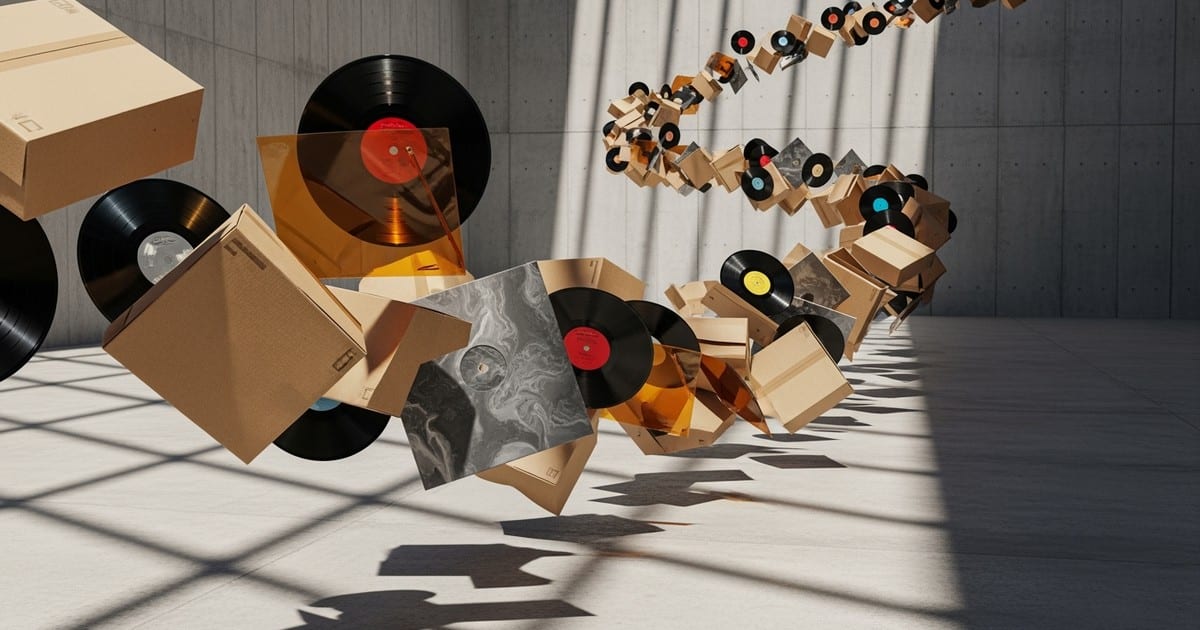
Physical Distribution Is Not Dead
How Physical Distribution Works
Physical distribution involves three distinct stages that digital distribution collapses into one.
Manufacturing. Someone has to make the CDs or press the vinyl. This is your responsibility, not the distributor's. You pay for production, then ship finished inventory to a warehouse.
Warehousing. The distributor (or their logistics partner) stores your product and fulfills orders from retailers. They pick, pack, and ship individual units as stores request them.
Retail sales. Retailers order product from the distributor's catalog. The distributor invoices the retailer, collects payment, deducts their fee, and passes your share to you. Unlike streaming, physical involves actual inventory that can be returned if it does not sell.
Note Physical distribution is consignment-style: retailers can return unsold product. CDs especially carry return risk, with labels often paying processing fees to scrap or refurbish returns.
Which Distributors Offer Physical
The market has shifted dramatically. Many distributors that are great for digital do not offer retail physical distribution, and the remaining options tend to be more selective.
| Distributor | Physical Formats | Retail Reach | Requirements |
|---|---|---|---|
| Symphonic (via AMPED) | Vinyl, CD, cassette, DVD, Blu-ray | Major chains, indie stores, Amazon, international | Must be digital client first; demonstrated retail demand |
| Secretly Distribution | Vinyl, CD, cassette | Global physical markets, indie stores, chains | Curated roster; established labels preferred |
| AMPED Distribution (direct) | All physical formats | Alliance Entertainment network, thousands of stores | Label-level deal; significant catalog |
| Redeye Worldwide | Vinyl, CD | US and international retail | Curated roster; active touring/marketing |
For most independent artists, Symphonic's AMPED partnership represents the most accessible path to physical retail distribution. However, "accessible" still means clearing a bar: you need to be an existing Symphonic digital client and demonstrate that retailers actually want your product.
Warning Do not assume your digital distributor can place physical product into retail. Confirm physical distribution capability before you manufacture inventory.
Manufacturing Options: Traditional vs. Print-on-Demand
Traditional Manufacturing
Traditional manufacturing requires upfront investment and minimum orders, but produces higher-quality product at lower per-unit costs for larger runs.
CD production follows two methods:
- Duplication (CD-R): best for very small runs and fast turnarounds.
- Replication (pressed): best for larger runs where unit economics matter and you want standard retail-grade product.
For CDs, the real difference is cost efficiency at scale, not audible quality. Replication is typically cheaper per unit at higher quantities, while duplication wins when you want small inventory and low commitment.
Vinyl pressing is more complex and expensive than CDs. Beyond the per-unit press cost, plan for setup work (mastering, test pressings) and longer lead times. The more you customize (colored vinyl, picture discs, deluxe packaging), the higher the cost and the higher the risk that delays push your ship date.
Crowdfunding and Print-on-Demand
For artists unwilling to risk upfront manufacturing costs, crowdfunding platforms reduce financial exposure by only pressing records once enough fans commit to purchase.
Crowdfunding and preorders can reduce your risk by collecting demand before you press. The exact options change over time, so treat the model as the takeaway: do not press inventory you cannot realistically sell.
Print-on-demand services manufacture CDs individually as orders arrive. Per-unit costs are higher, but there is zero inventory risk. This works for low-volume direct sales but is not viable for retail distribution.
The Economics of Physical Sales
Physical margins look attractive on paper but require careful calculation.
Retail distribution margins: retail and distribution both take meaningful cuts before you see revenue, and you still carry manufacturing risk.
Direct-to-fan usually has better unit economics because you capture the retail margin, but you take on fulfillment and customer support. Retail distribution only makes sense when it reaches buyers you cannot reach directly, or when retail presence creates marketing value beyond the sale itself.
The math favors direct sales in almost every scenario. Retail distribution only makes sense when it reaches customers you cannot reach directly, or when retail presence provides marketing value beyond the sale itself.
Tip Price physical product from the bottom up: manufacturing + packaging + fulfillment + fees, then margin. If the numbers do not work, press fewer units or focus on direct sales instead of retail.
When Physical Distribution Makes Sense
Physical is not for everyone. It makes sense in specific situations.
Merch table sales. If you tour regularly, physical product at shows is high-margin direct revenue. Fans buy because they just had an experience with you. You don't need retail distribution for this, just manufacturing.
Collector audiences. Certain genres (metal, indie rock, electronic, jazz) have strong collector cultures. Limited vinyl runs with special packaging, colored vinyl, or bonus content can sell at premium prices. Genre matters here: a pop release needs major retail distribution to move physical units, while a cult metal band can sell out 500 copies direct to fans.
Older demographics. Listeners over 40 still buy physical media at higher rates than younger audiences. Artists targeting this demographic, particularly in country, classic rock, or adult contemporary, may find retail placement worthwhile.
Marketing anchor for releases. A vinyl release creates press opportunities, in-store events, and a physical object that feels more substantial than a streaming link. Some artists manufacture small vinyl runs with no expectation of profit, treating them as marketing investments.
Note Variants can drive collector behavior when you already have demand. For most indie releases, a single quality pressing with clear positioning beats a confusing wall of editions.
Vinyl-Specific Considerations
Vinyl has unique constraints that CDs do not.
Audio limitations. Vinyl cannot reproduce the same dynamic range as digital. Bass-heavy tracks and very long albums require mastering adjustments, and you should plan for vinyl-specific mastering work if you want consistent quality.
Manufacturing lead times. Plan months, not weeks, from final audio to finished product. If your release plan needs vinyl on day one, start physical production well before you submit your digital release.
Quality control. Pressing plant quality varies. Poorly pressed records have surface noise, warping, or off-center labels. Research plant reputation before ordering. Gotta Groove and Precision Record Pressing are well-regarded US plants; Czech and German plants handle much of the quality European production.
Variant strategy. Colored vinyl, picture discs, and limited editions can drive collector purchases. However, variants only matter if you have an audience large enough to buy multiple copies. For most indie releases, one quality pressing outperforms five confusing options.
A practical path to physical distribution
If physical makes sense for your situation, here is the practical path:
Assess demand honestly Do you have fans actively asking for physical product? Have you successfully sold merch at shows? If not, test with a small Bandcamp run before investing in retail distribution.
Start with manufacturing only Order a small run (100-300 vinyl or 100-500 CDs) through Disc Makers, Gotta Groove, or your preferred plant. Sell direct through Bandcamp, your website, or at shows.
Build a track record If direct sales succeed, document your sales velocity. Physical distributors want evidence that retailers will order your product.
Apply for distribution Once you have proven demand, apply to Symphonic (if you are already a digital client) or pitch Secretly, Redeye, or AMPED directly. Expect a curated evaluation process, not automatic acceptance.
Most artists should stop at step 2. Direct sales through Bandcamp and merch tables capture more margin than retail distribution, with far less complexity. Retail distribution makes sense only when you have outgrown what direct sales can achieve.
Bottom Line
Physical music distribution is not obsolete, but it is also not the default choice it once was. Vinyl sales are growing, collectors exist across genres, and physical product creates marketing value that streams cannot replicate. However, the infrastructure for indie physical distribution has contracted. CD Baby exited the space, and the remaining distributors are selective about who they work with.
For most independent artists, the practical path is manufacturing for direct sales: press vinyl or CDs, sell them at shows and through Bandcamp, and keep more of each sale. Retail distribution is worth pursuing only when you have clear evidence that retailers will actually order your product, and when reaching those retail customers justifies the margin you give up.