
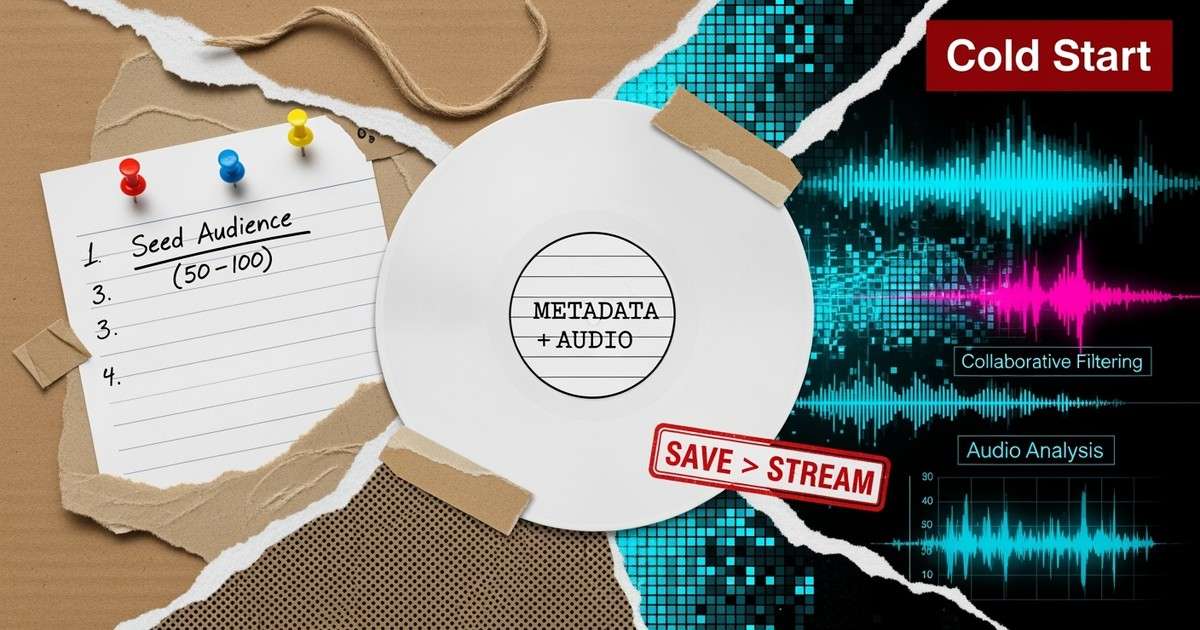
New artists face a fundamental challenge: the Spotify algorithm amplifies momentum, but you cannot have momentum without an audience. This is the cold start problem.
Unlike established artists who have followers, listening history, and collaborative filtering data, a brand new artist has none of these signals. The algorithm has no information about who your music is for or who might enjoy it.
How Spotify Handles New Artists
When a track has no behavioral data, Spotify relies on two alternative inputs:
Audio analysis scans your track's tempo, key, loudness, timbre, and structure to find sonically similar neighbors. This allows your song to appear in Radio or Autoplay sessions seeded from artists with similar sounds.
Text and metadata reads your genre tags, mood descriptors, and any press or playlist context. Accurate metadata ensures your track lands in the right buckets, not in workout playlists when you make ambient music.
These models do the early work, but they only get you into the pool. Behavioral signals from real listeners determine whether you stay and scale.
What Is the Seed Audience Strategy?
Tip The goal for a first release is not millions of streams. It is proving to the algorithm that your track earns engagement from the right listeners.
Before your release, build a small audience that will actually engage:
- Collect emails or phone numbers from anyone who has shown interest in your music
- Use social platforms to identify people who engage with similar artists
- Run a pre-save campaign to lock in day-one saves
- Create a private listening group (Discord, group chat) who will stream and save on release day
A seed audience of 50-100 genuine fans who save your track on day one sends a stronger signal than 1,000 passive streams from random listeners.
What Are the Best First Release Tactics for New Artists?
Pitch to Spotify for Artists at least 7 days early. This ensures your track hits your followers' Release Radar. Even if you only have 20 followers, those are your most valuable first listeners.
Make the first 30 seconds count. New artists cannot afford early skips. Get to the hook quickly. A listener who skips before 30 seconds sends a double negative: no stream counted and a mismatch signal that damages future recommendations.
Ask explicitly for saves. Your seed audience may not know that saves matter more than streams. Tell them. A CTA like "save this track to your library" converts at higher rates than "listen now."
Target listeners by taste, not demographics. Paid ads can accelerate seed audience building, but only if you target fans of sonically similar artists. Broad demographic targeting brings mismatched listeners who skip.
What Not To Do
Do not buy playlist placements. Paid playlist services often deliver streams from listeners who do not match your audience profile. High streams with low saves teaches the algorithm your track has no retention value.
Do not inflate streams artificially. Spotify detects artificial patterns. A track with 10,000 streams and near-zero saves looks like bot traffic and gets deprioritized.
Do not release without a seed audience. A track with zero engagement in week one has no signal for the algorithm to act on. It will sit dormant.
What Are Realistic Expectations for New Artists?
A new artist's first release rarely triggers major algorithmic pickup. The goal is to prove engagement, not go viral. If your first track gets 500 streams with a 15% save rate, you have given the algorithm a clear signal: your music earns retention from a specific listener profile.
That data compounds. Your second release benefits from the collaborative filtering your first release built. Your followers grow. Radio and Autoplay begin to recognize your sound.
The algorithm rewards consistency and audience fit over time. Focus on building the foundation that future releases can amplify.