Playlist Pitching Timeline - When to Pitch Before Release | Dynamoi
How-to Guide•
Updated
Playlist Pitching Timeline - When to Pitch Before Release
The 7-day rule, optimal submission windows, and what to do with rush releases. Timing your pitch for maximum editorial consideration.
Timing determines whether your pitch gets reviewed or ignored entirely. Each platform has minimum requirements and optimal windows. Miss the cutoff and your track enters the market without editorial consideration.
Spotify Timing Requirements
The 7-Day Minimum
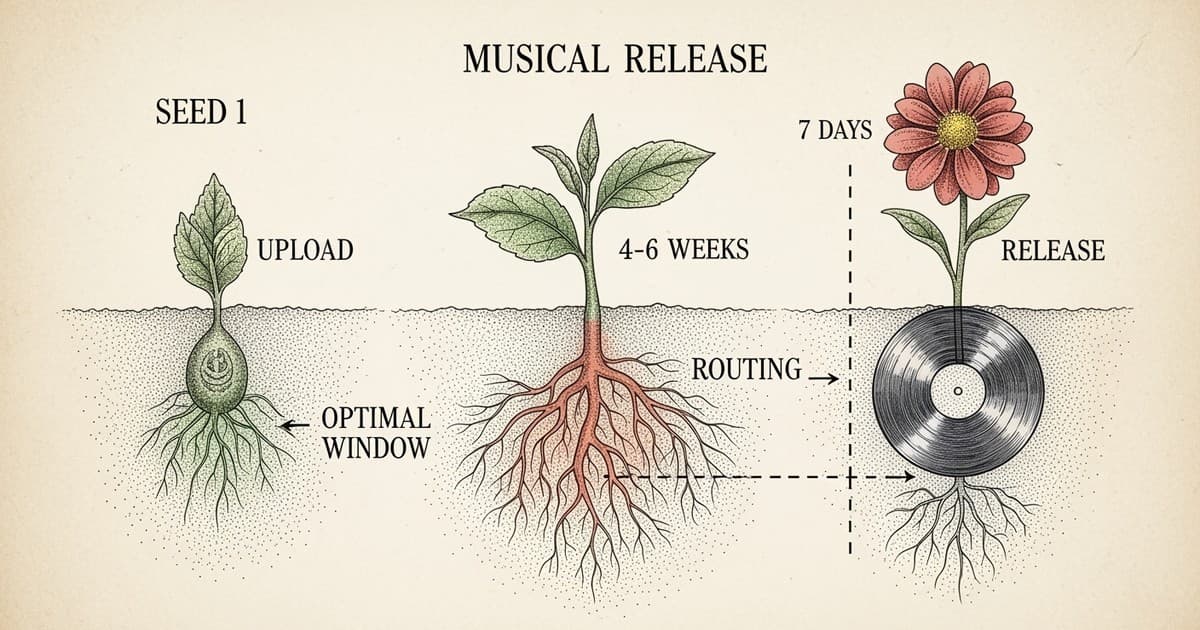
Spotify requires pitches to be submitted at least 7 days before release. This is the absolute floor. Anything less and your pitch won't be processed in time for editorial review.
What the 7-day minimum guarantees: Your pitched track appears in your followers' Release Radar, the pitch enters the editorial queue, and metadata is processed for algorithmic routing.
What it doesn't guarantee: Editorial review (volume is too high), playlist placement, or any feedback on rejection.
The 4-6 Week Sweet Spot
Best practice is submitting 4-6 weeks before release. This window gives:
Regional coverage. Spotify operates editorial desks across time zones. Pitches need time to route to the right regional team, especially for non-English markets.
Editorial calendar alignment. Editors plan playlists weeks ahead. A last-minute pitch can't make it onto a playlist that was finalized two weeks ago.
Buffer for distributor delays. Your track must be delivered to Spotify before you can pitch. Distribution processing varies. Build in slack time.
The Release Day Upload Problem
Artists who upload and release in the same week forfeit pitching entirely. The track isn't in the system long enough to pitch, and you can't pitch already-released music.
Timeline for same-day release (DON'T DO THIS):
Day
Action
Problem
Monday
Upload to distributor
Apple Music Timing
Apple Music doesn't offer direct pitching for independent artists. Submissions go through distributors, which adds a layer of lead time.
Distributor Requirements
Most distributors require 3-4 weeks minimum to pitch Apple Music on your behalf. Some don't pitch at all. Check your distributor's editorial services before release planning.
Distributor
Apple Pitching
Typical Lead Time
DistroKid
Limited (Plus tier)
4 weeks
TuneCore
Yes (paid add-on)
3-4 weeks
CD Baby
Yes
4 weeks
AWAL
Yes (vetted roster)
4-6 weeks
UnitedMasters
Yes
3-4 weeks
What Apple Looks For
Apple's editorial team values Spatial Audio availability. If your track is mixed in Dolby Atmos, flag this in your distributor pitch request. It's a differentiator.
Amazon Music Timing
Amazon offers the most flexibility. Their pitch tool allows submissions up to 14 days after release.
Pre-Release (Recommended)
For maximum impact, pitch 2-3 weeks before release. This gives Amazon's team time to schedule playlist adds for release day or week.
Post-Release Window
Unlike Spotify, Amazon accepts pitches up to 14 days after a track goes live. This is useful for:
Rush releases that couldn't be pitched elsewhere
Tracks gaining unexpected traction post-release
Testing market response before pitching
However, post-release pitching is less effective. Editors prioritize new music; a track that's been out for two weeks has already missed the "new release" window.
How-to Guide•
Updated
Playlist Pitching Timeline - When to Pitch Before Release
The 7-day rule, optimal submission windows, and what to do with rush releases. Timing your pitch for maximum editorial consideration.
Timing determines whether your pitch gets reviewed or ignored entirely. Each platform has minimum requirements and optimal windows. Miss the cutoff and your track enters the market without editorial consideration.
Spotify Timing Requirements
The 7-Day Minimum
Spotify requires pitches to be submitted at least 7 days before release. This is the absolute floor. Anything less and your pitch won't be processed in time for editorial review.
What the 7-day minimum guarantees: Your pitched track appears in your followers' Release Radar, the pitch enters the editorial queue, and metadata is processed for algorithmic routing.
What it doesn't guarantee: Editorial review (volume is too high), playlist placement, or any feedback on rejection.
The 4-6 Week Sweet Spot
Best practice is submitting 4-6 weeks before release. This window gives:
Regional coverage. Spotify operates editorial desks across time zones. Pitches need time to route to the right regional team, especially for non-English markets.
Editorial calendar alignment. Editors plan playlists weeks ahead. A last-minute pitch can't make it onto a playlist that was finalized two weeks ago.
Buffer for distributor delays. Your track must be delivered to Spotify before you can pitch. Distribution processing varies. Build in slack time.
The Release Day Upload Problem
Artists who upload and release in the same week forfeit pitching entirely. The track isn't in the system long enough to pitch, and you can't pitch already-released music.
Timeline for same-day release (DON'T DO THIS):
Day
Action
Problem
Monday
Upload to distributor
Apple Music Timing
Apple Music doesn't offer direct pitching for independent artists. Submissions go through distributors, which adds a layer of lead time.
Distributor Requirements
Most distributors require 3-4 weeks minimum to pitch Apple Music on your behalf. Some don't pitch at all. Check your distributor's editorial services before release planning.
Distributor
Apple Pitching
Typical Lead Time
DistroKid
Limited (Plus tier)
4 weeks
TuneCore
Yes (paid add-on)
3-4 weeks
CD Baby
Yes
4 weeks
AWAL
Yes (vetted roster)
4-6 weeks
UnitedMasters
Yes
3-4 weeks
What Apple Looks For
Apple's editorial team values Spatial Audio availability. If your track is mixed in Dolby Atmos, flag this in your distributor pitch request. It's a differentiator.
Amazon Music Timing
Amazon offers the most flexibility. Their pitch tool allows submissions up to 14 days after release.
Pre-Release (Recommended)
For maximum impact, pitch 2-3 weeks before release. This gives Amazon's team time to schedule playlist adds for release day or week.
Post-Release Window
Unlike Spotify, Amazon accepts pitches up to 14 days after a track goes live. This is useful for:
Rush releases that couldn't be pitched elsewhere
Tracks gaining unexpected traction post-release
Testing market response before pitching
However, post-release pitching is less effective. Editors prioritize new music; a track that's been out for two weeks has already missed the "new release" window.
Processing begins
Wednesday
Track appears in Spotify for Artists
Too late to meet 7-day minimum
Friday
Release
Zero pitch opportunity
Timeline for proper release planning:
Week
Action
Week 1
Upload to distributor
Week 2
Track appears in Spotify for Artists, submit pitch
Week 3-5
Editorial review period
Week 6
Release
Deezer Timing
Deezer requires 7 days minimum, similar to Spotify. Since pitching is restricted to labels and distributors with Provider accounts, verify your distributor's Deezer relationship and their internal deadlines.
Rush Release Scenarios
Sometimes you need to release quickly. Here's how to salvage what you can.
Less Than 7 Days Before Release
Spotify: You cannot pitch. The track won't appear in Release Radar via pitch. However, if you have followers, the algorithm may still add it to their Release Radar based on follow relationships.
Amazon: Pitch after release using the 14-day window. Better than nothing.
Apple/Deezer: No options without distributor involvement.
Strategy for Unplanned Releases
If you must release quickly:
Accept you're skipping editorial on this release
Focus paid promotion on driving saves and completion rates
Let algorithmic momentum build organically
Plan your next release with proper lead time
Seasonal Considerations
Holiday Periods
Editorial teams operate with reduced staff during major holidays. Avoid pitching during the last two weeks of December, around major US holidays (Thanksgiving, July 4th), and in August (common vacation month in Europe). Pitches submitted during these periods sit in queues longer and may miss relevant playlists entirely.
Tentpole Moments
Certain periods are crowded with major label releases: October-November sees awards season pushes, December is dominated by holiday albums, and January brings post-holiday catchup. Independent artists sometimes find better results in off-peak months (February, March, June) when editorial teams have more capacity for discovery.
Genre-Specific Windows
Summer favors upbeat, outdoor music. Fall favors introspective, acoustic content. Align your release timing with the natural editorial calendar:
Season
Favored Content
Spring
Fresh, hopeful, new beginnings
Summer
Upbeat, party, festival
Fall
Moody, introspective, acoustic
Winter
Cozy, holiday, nostalgic
Building a Release Calendar
For artists releasing consistently, establish a rhythm that allows proper pitch timing.
Cadence
Timeline
Monthly
Day 1: Finalize mix/master → Week 1: Upload to distributor → Week 2: Submit pitches → Week 4-5: Release
Track uploaded to distributor 6+ weeks before release
Spotify pitch submitted 4-6 weeks out (7 days minimum)
Distributor notified about Apple Music pitch request
Amazon pitch submitted pre-release or within 14-day window
Avoided holiday blackout periods
Release date aligned with genre seasonality
Processing begins
Wednesday
Track appears in Spotify for Artists
Too late to meet 7-day minimum
Friday
Release
Zero pitch opportunity
Timeline for proper release planning:
Week
Action
Week 1
Upload to distributor
Week 2
Track appears in Spotify for Artists, submit pitch
Week 3-5
Editorial review period
Week 6
Release
Deezer Timing
Deezer requires 7 days minimum, similar to Spotify. Since pitching is restricted to labels and distributors with Provider accounts, verify your distributor's Deezer relationship and their internal deadlines.
Rush Release Scenarios
Sometimes you need to release quickly. Here's how to salvage what you can.
Less Than 7 Days Before Release
Spotify: You cannot pitch. The track won't appear in Release Radar via pitch. However, if you have followers, the algorithm may still add it to their Release Radar based on follow relationships.
Amazon: Pitch after release using the 14-day window. Better than nothing.
Apple/Deezer: No options without distributor involvement.
Strategy for Unplanned Releases
If you must release quickly:
Accept you're skipping editorial on this release
Focus paid promotion on driving saves and completion rates
Let algorithmic momentum build organically
Plan your next release with proper lead time
Seasonal Considerations
Holiday Periods
Editorial teams operate with reduced staff during major holidays. Avoid pitching during the last two weeks of December, around major US holidays (Thanksgiving, July 4th), and in August (common vacation month in Europe). Pitches submitted during these periods sit in queues longer and may miss relevant playlists entirely.
Tentpole Moments
Certain periods are crowded with major label releases: October-November sees awards season pushes, December is dominated by holiday albums, and January brings post-holiday catchup. Independent artists sometimes find better results in off-peak months (February, March, June) when editorial teams have more capacity for discovery.
Genre-Specific Windows
Summer favors upbeat, outdoor music. Fall favors introspective, acoustic content. Align your release timing with the natural editorial calendar:
Season
Favored Content
Spring
Fresh, hopeful, new beginnings
Summer
Upbeat, party, festival
Fall
Moody, introspective, acoustic
Winter
Cozy, holiday, nostalgic
Building a Release Calendar
For artists releasing consistently, establish a rhythm that allows proper pitch timing.
Cadence
Timeline
Monthly
Day 1: Finalize mix/master → Week 1: Upload to distributor → Week 2: Submit pitches → Week 4-5: Release