

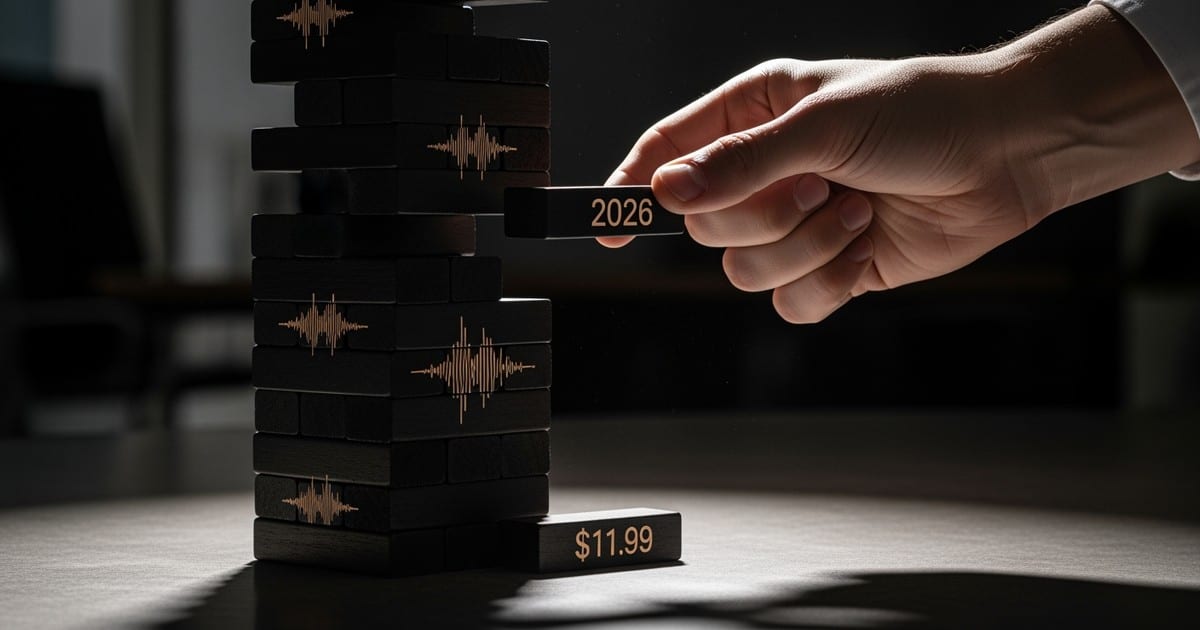
Spotify is preparing another price increase for its U.S. subscribers, setting up a fresh test of how much fans will pay for on-demand music before they start to churn.
According to reporting in the Financial Times, summarized by 9to5Mac, the company plans to raise U.S. subscription prices again in the first quarter of 2026, following hikes last year in the U.S. and in August across several other markets.
The report says major record labels have been pressing both Spotify and Apple to move subscription prices higher, arguing that music has lagged far behind video streamers on inflation and perceived value.
Right now, Spotify Premium costs $11.99 per month in the U.S., compared with $10.99 for Apple Music, leaving room for both platforms to nudge prices up without immediately matching services like Netflix. The exact new Spotify price has not yet been disclosed.
Label Pressure Meets Fan Tolerance
For labels and rights holders, another increase is attractive on paper: higher ARPU should flow directly into the royalty pool, assuming engagement and subscriber numbers hold steady.
That extra headroom could make it easier to green-light marketing budgets for campaign spikes, catalog activations and pre-save pushes tied to big releases.
But for marketing teams on the ground, the more urgent question is how many fans will see a 2026 price change as the moment to finally cancel, downgrade or switch to a competing bundle.
Price-sensitive listeners who only use Premium for ad-free background listening may decide the convenience is no longer worth it, especially if they already pay for other video or gaming subscriptions.
Heavy-use fans who treat Spotify as their primary music utility are more likely to swallow the increase, but they will expect more value in return, from better discovery to smarter personalization and exclusives.
What Smart Teams Should Do Before The Hike Lands
The upside of a rumor-driven timeline is that labels, managers and marketers have a few months to prepare instead of reacting after the fact.
First, revisit your segmentation and lifetime value models: identify which cohorts are most likely to churn on price and which are worth over-investing in with retention campaigns, exclusive content drops or early access offers.
Second, sync with your distribution and analytics partners so you can monitor subscriber behavior in the weeks before and after the announced change, looking for early signals in skip rates, daily listening time and device mix.
Third, start planning messaging that frames music subscriptions as a high-value, relatively low-cost entertainment spend compared with video or live tickets, especially in territories where inflation has already conditioned fans to expect higher prices elsewhere.
Finally, use the looming price hike as a nudge to diversify revenue: push harder on direct-to-fan memberships, super-fan products and ticketed experiences so you are less exposed if subscription growth slows.
Streaming is still the center of the recorded-music business, but 2026 is shaping up as another year where pricing experiments and label pressure collide with consumer fatigue.
Teams that treat this as a predictable, modelable shift rather than a surprise shock will be in a better position to protect market share, negotiate with platforms and keep their best fans engaged even as the monthly bill inches up.