

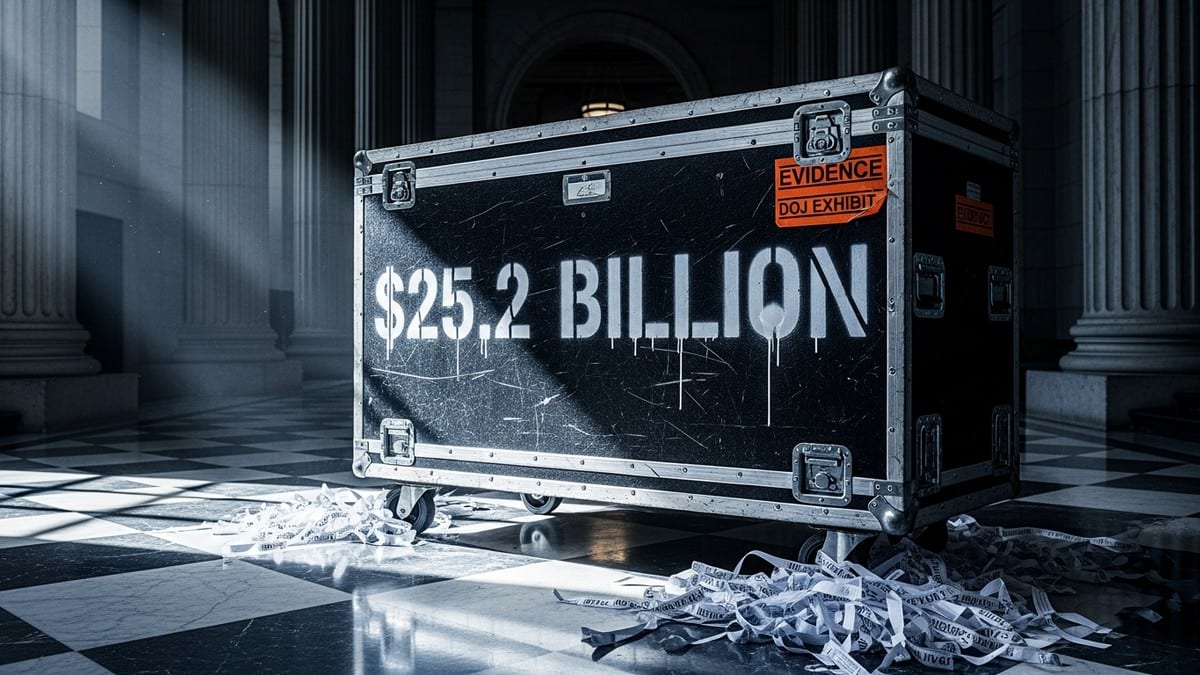
It was the best of times, it was the worst of times—and for Live Nation, it was all happening in the same 48-hour window. The live entertainment giant posted a staggering $25.2 billion in annual revenue this week, proving its operational machine is humming. Yet, the narrative has been hijacked by a bizarre sequence of unforced errors and political explosions just days before its March 2 antitrust trial.
A tactical retraction
On Thursday, Live Nation’s EVP of Corporate Affairs, Dan Wall, published a blog post titled "It's Time to Move On," explicitly urging the DOJ to settle. His logic: Judge Arun Subramanian had dismissed the claim that Live Nation monopolizes the concert promotion market, which Wall argued removed the legal basis for a company breakup.
By Friday morning, the post was gone. Deleted. Dead link.
This "ghost edit" suggests a severe miscalculation. Publicly pressuring the government to settle can look like weakness, but deleting the plea looks like panic. Legal analysts speculate the retraction occurred because the judge’s ruling wasn't the total victory Wall claimed, or because the DOJ signaled that public posturing would kill any remaining backroom negotiations.
Political toxicity rises
While the blog post vanished, a new problem emerged in the Senate. A coalition of Democrats led by Senator Amy Klobuchar has launched an inquiry into the firing of DOJ Antitrust Chief Gail Slater on February 12. The timeline is suspicious: Slater was ousted less than three weeks before the trial against Live Nation was set to begin.
The allegation: Senators cite reports that a Live Nation lobbyist boasted about recommending Slater's firing and posted "Good riddance" online, raising fears of regulatory capture to secure a lenient settlement.
This probe makes a quiet settlement politically radioactive. Even if DOJ leadership wanted to cut a deal, doing so now—under the cloud of a Senate corruption inquiry—would invite a firestorm. The odds of a full courtroom showdown on March 2 have skyrocketed.
Judge Subramanian's mixed bag
Live Nation’s desire to settle stems from the mixed ruling delivered on February 18. While the company successfully dodged the charge of monopolizing concert promotions, the court preserved the most dangerous threats to its business model.
Two critical claims are proceeding to trial:
- Ticketing Monopoly: The judge ruled that claims regarding Ticketmaster’s dominance in venue-facing services must be heard, noting the company "vastly overstated" market competitiveness.
- Illegal Tying: The accusation that Live Nation forces artists to use its promotion services to access its amphitheaters will go before a jury. The judge stated a reasonable jury could find artists were "coerced."
Cash flow vs. courtrooms
Amidst the legal chaos, the financial engine remains untouched. The FY 2025 earnings report paints a picture of a company that is practically unkillable in the open market, regardless of its legal bills.
- Revenue: $25.2 billion (up 9% YoY)
- Profitability:
AOIhit $2.37 billion (up 10% YoY) - Demand: 159 million fans attended shows in 2025
The forward-looking data is equally robust, with 67 million tickets already sold for 2026. However, Wall Street is nervous. The stock (LYV) jumped 4.1% on the earnings beat but is now fluctuating as investors weigh the risk of behavioral remedies—like bans on exclusive ticketing contracts—that could sever the lucrative flywheel connecting venues to Ticketmaster.
Implications for managers
For artist teams, this volatility creates a specific window of leverage. With the "Amphitheater Tying" claim heading to trial, Live Nation will be hyper-sensitive about the appearance of coercion.
The opportunity: Managers routing amphitheater tours for 2026 may find Live Nation unusually flexible regarding promotion terms. The company cannot afford a fresh complaint from a major artist landing on the DOJ's desk while the jury is seated. Meanwhile, competitors like AEG and independent promoters should prepare for a potential post-trial landscape where exclusive venue ticketing deals are outlawed, cracking the door open for platforms like SeatGeek and AXS.