

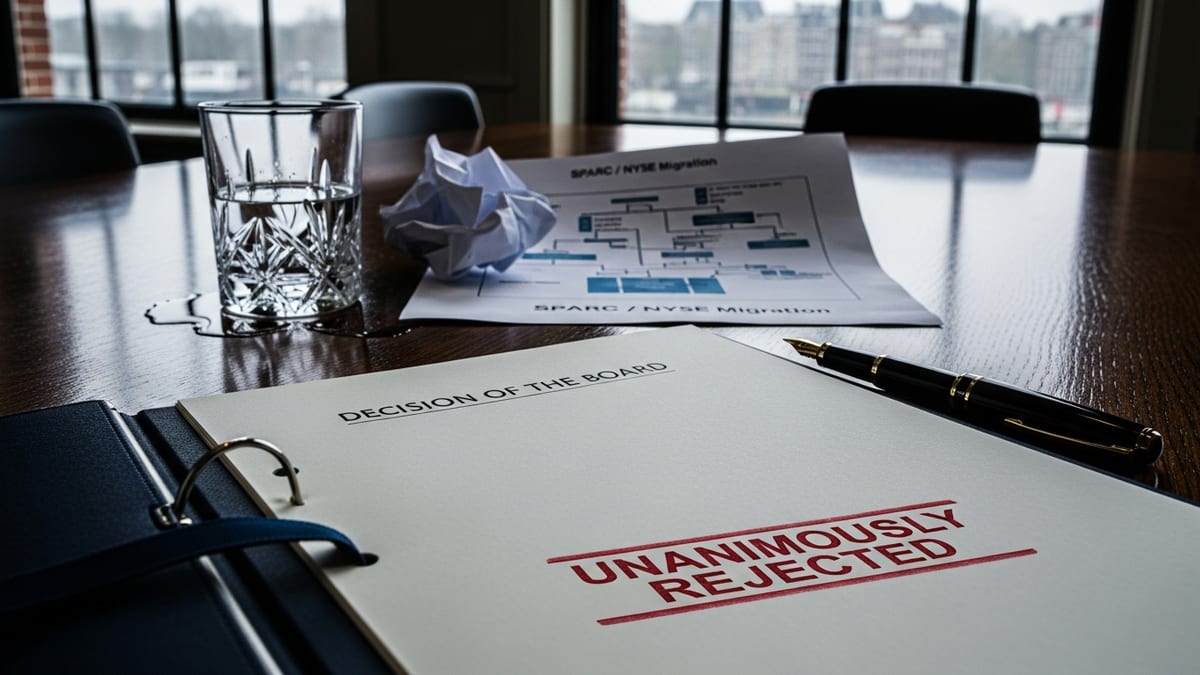
On May 29, 2026, the Board of Directors of Universal Music Group (UMG) unanimously rejected Bill Ackman’s unsolicited, non-binding takeover proposal. The decision ends weeks of speculation surrounding the billionaire investor's ambitious attempt to seize control of the world's largest music rights holder.
Anatomy of a lopsided offer
Ackman's hedge fund, Pershing Square Capital Management, initially turned heads on April 7, 2026, with a bid valuing UMG at €55.8 billion (approximately $64.4 billion). The headline offer of €30.40 per share represented a staggering 78% premium over UMG's closing price on April 2.
However, the board quickly identified a glaring structural catch. While the hybrid stock-and-cash deal promised high paper value, the pure cash alternative was heavily discounted. Shareholders electing to take cash outright would receive just €22 per share, valuing UMG at roughly $43 billion. That valuation falls below UMG's initial public offering price in 2021, making the premium look like a mirage to institutional investors who require liquidity.
The Nevada-bound SPARC engine
The proposed mechanics of the deal were highly unusual, utilizing Pershing Square SPARC Holdings, Ltd., a Special Purpose Acquisition Rights Company.
Ackman planned to execute a complex reverse merger to take UMG private, reincorporate the business in Nevada, and list the new entity on the New York Stock Exchange. Moving the primary listing from Euronext Amsterdam to Wall Street was designed to capture higher U.S. trading multiples. Yet, this cross-border migration introduced massive tax complexities and regulatory hurdles that UMG's leadership deemed unacceptable for a stable, dividend-paying multinational.
| Metric | Current UMG Structure | Pershing Square Proposal |
|---|---|---|
| Location | Netherlands (Euronext Amsterdam) | Nevada (New York Stock Exchange) |
| Cash Valuation | Public Market Trading Price | €22 per share ($43B total) |
| Corporate Vehicle | Traditional Public Corporation | Reverse Merger via SPARC |
Why the Bolloré veto closed the door
In the end, the deal did not just fail on financial terms: it hit an insurmountable governance wall. The Bolloré Group, which controls a decisive 28% voting block both directly and through Vivendi, formally opposed the transaction on May 27, 2026.
Because UMG’s corporate bylaws and European governance structures give significant weight to anchor shareholders, the Bolloré veto made any path to a hostile takeover mathematically impossible. The board’s subsequent unanimous rejection was the final, formal nail in the coffin.
Key insight: A high headline premium cannot compensate for complex corporate restructuring that dilutes governance control and penalizes shareholders seeking direct liquidity.
Strategic takeaways for rights holders
This failed takeover bid signals a shifting valuation landscape for major music catalogs and corporate control.
- The benefit: UMG retains its independent strategic direction and remains anchored in European capital markets with stable governance.
- The risk: Failing to capture NYSE trading multiples may leave UMG vulnerable to future activist pressure if streaming growth slows and
LTVmetrics soften. - Works when: Major labels maintain high market share and leverage consistent streaming royalty revenues to defend their standalone valuations.
- Fails when: Activists exploit temporary stock dips to force structural changes that fragment corporate control.