
Dynamoi LogoMusic Promotion · YouTube Growth
PricingHow it worksFor labelsWhite LabelYouTube
Get Started
HomeNewsApple Bets $2B on "Silent" Audio Controls With Q.ai Acquisition

Apple Bets $2B on "Silent" Audio Controls With Q.ai Acquisition

Trevor Loucks

Edited By Trevor Loucks

Founder & Lead Developer, DynamoiFebruary 3, 2026
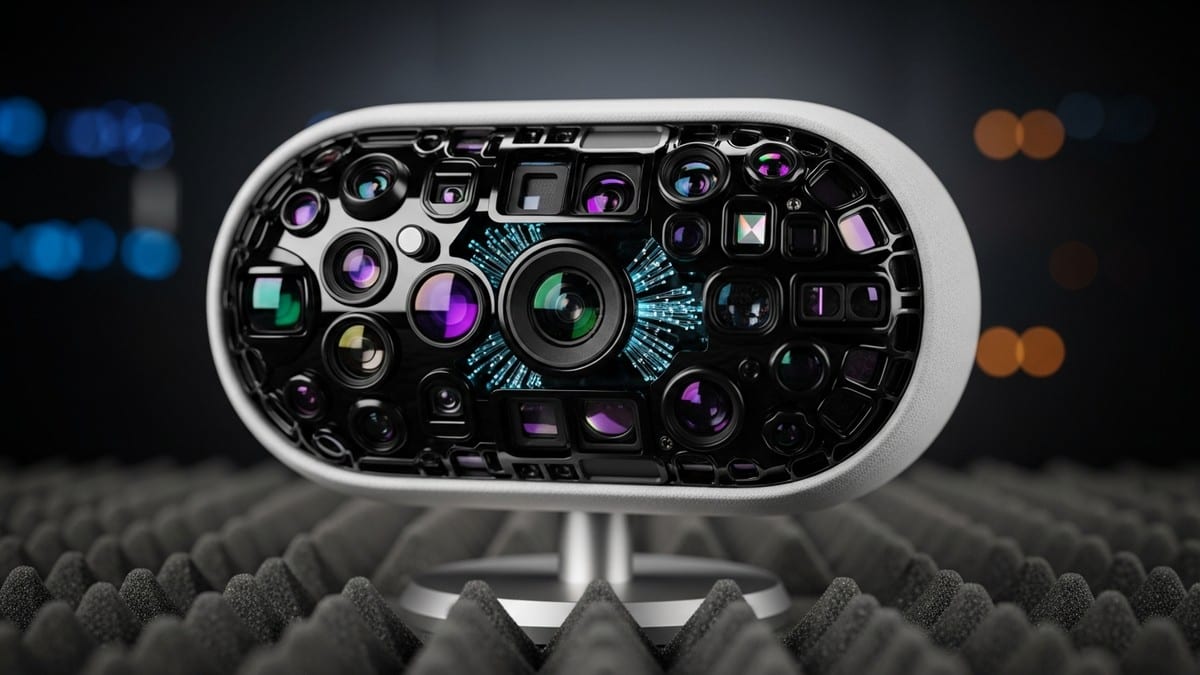
Close-up of a conceptual high-tech microphone where the mesh grille is replaced by a complex array of optical camera lenses and biometric sensors, glowing with faint blue data light. (16:9)

In a move that eclipses nearly a decade of hardware strategy, Apple has confirmed the acquisition of Israeli AI audio startup Q.ai. Valued between $1.6 billion and $2 billion, the deal is Apple’s most significant play since the $3 billion purchase of Beats Electronics in 2014.

While the industry has spent the last year obsessed with generative audio—who creates the song—Apple just dropped a massive bet on interactive audio—how the listener commands it. This is not another content play. It is an infrastructure overhaul designed to kill the "Hey Siri" command in favor of something far more discreet.

A rare megadeal

Apple rarely spends billions on acquisitions. It usually prefers smaller "acqui-hires" to quietly absorb talent. Breaking the $1 billion ceiling signals that this technology is not just an add-on but a foundational pillar for the next decade of hardware.

Confirmed by GV (formerly Google Ventures) and other backers like Kleiner Perkins, the deal brings approximately 100 engineers into Apple’s fold. Most notably, it marks the return of Aviad Maizels to Cupertino. As the founder of PrimeSense—the 3D sensing tech behind FaceID—Maizels has a track record of turning obscure sensors into industry standards.

Decoding silent speech

Q.ai specializes in "silent speech" interfaces. Their technology uses optical sensors and machine learning to track facial skin micro-movements, allowing users to control devices by mouthing words without making a sound.

Key insight: This solves the "social friction" problem of voice assistants. Users no longer need to shout commands at their wrist or earbuds in a crowded train car. They simply mouth "skip" or "volume up" invisibly.

For music rights holders, this removes a major barrier to discovery. Current voice interfaces have high abandonment rates in public spaces due to privacy concerns and ambient noise. A silent interface effectively keeps the consumption funnel open 24/7, regardless of the user's environment.

Biometric playlisting

Beyond simple commands, Q.ai brings a suite of bio-sensing patents that could redefine algorithmic recommendations. The technology can assess physiological indicators—including heart rate, respiration, and emotional state—solely through facial sensing.

If integrated into the next generation of AirPods or the Vision Pro, Apple Music could theoretically shift from historical data (what you listened to yesterday) to real-time biological feedback (how you feel right now). A playlist could adjust tempo automatically if the sensors detect a spike in stress levels or a drop in engagement, creating a feedback loop that Spotify and Amazon cannot replicate with software alone.

The wearable battlefield

This acquisition is a direct counterstrike against Meta’s Ray-Ban smart glasses and neural wristband efforts. As music consumption migrates toward "heads-up" computing and AR, the platform with the least intrusive control mechanism wins.

The strategy:

  • Works when: Users are in public, noisy, or quiet environments where speaking is taboo.
  • The risk: Consumer comfort with facial scanning remains a hurdle, though FaceID has normalized the behavior.
  • The payout: Apple secures a proprietary input method that locks subscribers deeper into its hardware ecosystem.

What labels should watch

Marketing teams currently optimize for SEO and voice search queries. This shift necessitates thinking about "intent-based" discovery. If Apple successfully deploys mood-sensing audio hardware, the metadata required to service those recommendations becomes far more complex than simple genre tags.

Investors reacted with cautious optimism, pushing Apple stock up 0.5%. But for the music business, the signal is louder: the interface war has moved from the screen to the sensors.

Editorial Policysupport@dynamoi.com

About the Editor

Trevor Loucks

Trevor Loucks is the founder and lead developer of Dynamoi, where he focuses on the convergence of music business strategy and advertising technology. He focuses on applying the latest ad-tech techniques to artist and record label campaigns so they compound downstream music royalty growth.

trevorloucks.com

Related Stories

A hyper-realistic editorial image of a vintage analog mixing console with a single futuristic, glowing glass fader module floating upwards, disconnected from the main board. (16:9)

UMG Wins Approval for $775M Downtown Deal With Curve Divestment

Cinematic still life of an open music touring road case filled with stacks of cash, gold bars, and silver master tape reels, illuminated by intense red and cool blue split lighting. (16:9)

Warner And Bain Target Red Hot Chili Peppers With $1.65B War Chest

Close-up macro shot of a professional audio mixing console fader with a strip of masking tape labeled '19.8B' in black marker, illuminated by vibrant teal and magenta stage lighting. (16:9)

Apple Music Unveils Bad Bunny Halftime Hub After Historic Grammy Win

A close-up, low-angle editorial photograph showing a heavy wooden judicial gavel resting on a scattered pile of concert tickets, some of which are fading into translucent ghost-like forms. (16:9)

Senate Targets Live Nation in High-Stakes TICKET Act Reboot

Recent Articles

A battered black concert road case stenciled with '$25.2 BILLION' sits alone in a grand, marble-floored federal courthouse hallway, surrounded by scattered shredded paper. (16:9)
Live Nation Posts $25.2B Year as DOJ Settlement Bid BackfiresFebruary 23, 2026
A sleek smartphone wedges open a heavy industrial steel stage door, allowing brilliant beams of blue and purple concert lighting to spill out onto wet concrete. (16:9)
Spotify Launches In-App Ticketing With SeatGeek at 15 StadiumsFebruary 22, 2026
A hyper-realistic conceptual image of complex industrial machinery composed of brass musical instrument parts, heavy audio cables, and glowing server rack components, representing the 'plumbing' of the music industry. (16:9)
VMG Completes $775M Downtown Buyout as Founder ExitsFebruary 22, 2026
A close-up of a recording studio mixing console featuring a missing brand nameplate and a digital meter displaying a red 73 percent drop. (16:9)
Borchetta Buys Back Big Machine Brand as HYBE Profit Falls 73%February 13, 2026
A hyper-realistic editorial image of a vintage analog mixing console with a single futuristic, glowing glass fader module floating upwards, disconnected from the main board. (16:9)
UMG Wins Approval for $775M Downtown Deal With Curve DivestmentFebruary 13, 2026

Recent Articles

  • A battered black concert road case stenciled with '$25.2 BILLION' sits alone in a grand, marble-floored federal courthouse hallway, surrounded by scattered shredded paper. (16:9)
    Live Nation Posts $25.2B Year as DOJ Settlement Bid BackfiresFebruary 23, 2026
  • A sleek smartphone wedges open a heavy industrial steel stage door, allowing brilliant beams of blue and purple concert lighting to spill out onto wet concrete. (16:9)
    Spotify Launches In-App Ticketing With SeatGeek at 15 StadiumsFebruary 22, 2026
  • A hyper-realistic conceptual image of complex industrial machinery composed of brass musical instrument parts, heavy audio cables, and glowing server rack components, representing the 'plumbing' of the music industry. (16:9)
    VMG Completes $775M Downtown Buyout as Founder ExitsFebruary 22, 2026
  • A close-up of a recording studio mixing console featuring a missing brand nameplate and a digital meter displaying a red 73 percent drop. (16:9)
    Borchetta Buys Back Big Machine Brand as HYBE Profit Falls 73%February 13, 2026
  • A hyper-realistic editorial image of a vintage analog mixing console with a single futuristic, glowing glass fader module floating upwards, disconnected from the main board. (16:9)
    UMG Wins Approval for $775M Downtown Deal With Curve DivestmentFebruary 13, 2026

Automate Music Marketing onMeta, YouTube, TikTok & MoreOne-Click Campaign Deployment

Get Started
Dynamoi Logo

Join Artists, Labels & YouTube Creators Scaling with Dynamoi

Get Started Now
Dynamoi Logo

The operating system for music growth. Powered by data. Built for artists.

Created by Trevor Loucks

Company

About UsPricingFor LabelsWhite LabelAffiliate ProgramData License
Legal
Privacy PolicyTerms of Service

Features

Marketing
How it WorksYouTube MarketingSpotify MarketingTikTok Promotion
Resources
Data CatalogRoyalties CalculatorLearnNews

Connect

Contact SupportDocs