

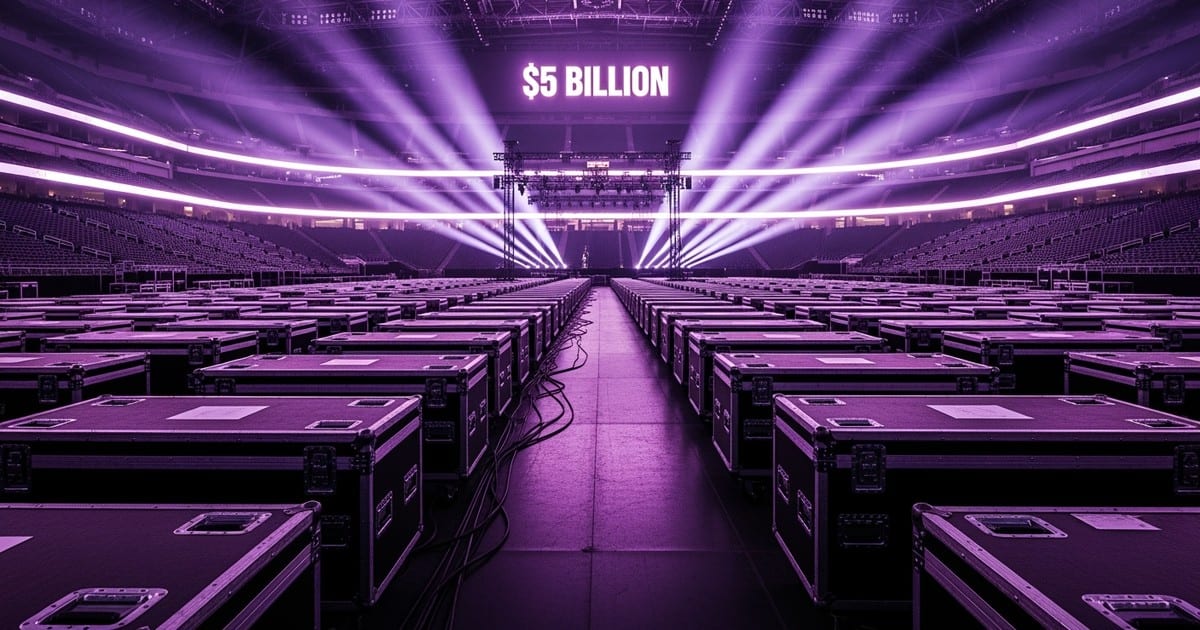
HYBE Corporation officially reactivated its most valuable asset on January 1, confirming that BTS will return with a studio album on March 20, 2026, followed by a massive global tour. This ends the group's mandatory military service hiatus and signals a major liquidity event for the global entertainment economy.
Analysts project the return will inject roughly $4–5 billion into the global market in 2026. For music professionals, this is more than a comeback; it is a stress test for venue availability in an already congested touring year and a validation of the K-pop business model's resilience.
The direct-to-consumer play
HYBE bypassed traditional media filters to break the news, leveraging its proprietary Weverse platform to target high-value users first. On January 1, the company distributed physical handwritten letters to fans who had maintained continuous platform membership during the three-year hiatus.
The strategy: This move rewards retention over acquisition. By offering exclusive "first knowledge" to long-term subscribers, HYBE reinforces the value of recurring fan club revenue, which served as a crucial financial bridge during the group's absence. The subsequent digital confirmation set a release timeline that allows for Q1 revenue recognition of pre-orders, positioning the tour to dominate Q2 and Q3.
A 65-show supply shock
The 2026 live music calendar is already crowded with legacy acts like Oasis, but the BTS tour introduces a massive volume of premium inventory. Hyundai Motor Securities projects a run of approximately 65 shows starting in May, aiming for 4 million attendees.
Key insight: Even with a conservative average ticket price of $150, a tour of this magnitude would gross $600 million in ticket sales alone, before accounting for VIP packages and merchandise.
This creates a "clash of titans" for stadium routing. Promoters and competing artist teams must now navigate a landscape where production resources—staging, audio equipment, and personnel—will be at a premium. Supply chain constraints in the touring sector are likely to re-emerge as these mega-tours compete for the same infrastructure.
Valuation targets and GDP
Wall Street has long viewed the military service period as a cap on HYBE's growth. With that uncertainty removed, analysts are recalibrating expectations.
- Market Cap: Investment targets are scaling toward 15 trillion won ($10.5 billion), up from the current 11 trillion won standing.
- Operating Profit: Projections suggest quarterly operating profit could hit $75 million once the tour commences in Q2.
- Macro Impact: Before 2022, BTS contributed an estimated 0.3% to South Korea's total GDP. With post-pandemic inflation and the "scarcity premium" of a comeback, the 2026 economic multiplier will likely exceed pre-enlistment levels.
Surviving the military cliff
For decades, mandatory enlistment was considered a career-ender for K-pop boy bands. HYBE has effectively rewritten this narrative by treating the group as a diversified conglomerate rather than a single act.
Works when: The label executes a "franchise" strategy. During the break, solo releases from members like Jungkook and Jimin kept the IP active on streaming charts, preventing the brand from cooling off.
The result: A seamless pivot from discharge in mid-2025 to a Q1 2026 album. This operational discipline minimized the downtime that typically erodes artist value, offering a blueprint for Western labels managing long gaps between album cycles.
What labels should watch
The March 20 release date creates a significant "blast radius" in the streaming ecosystem. Major releases scheduled for late March or early April risk being drowned out by the inevitable monopolization of Spotify playlists and social algorithms. Smart A&R teams will likely adjust release windows to avoid direct competition with the initial comeback wave.