
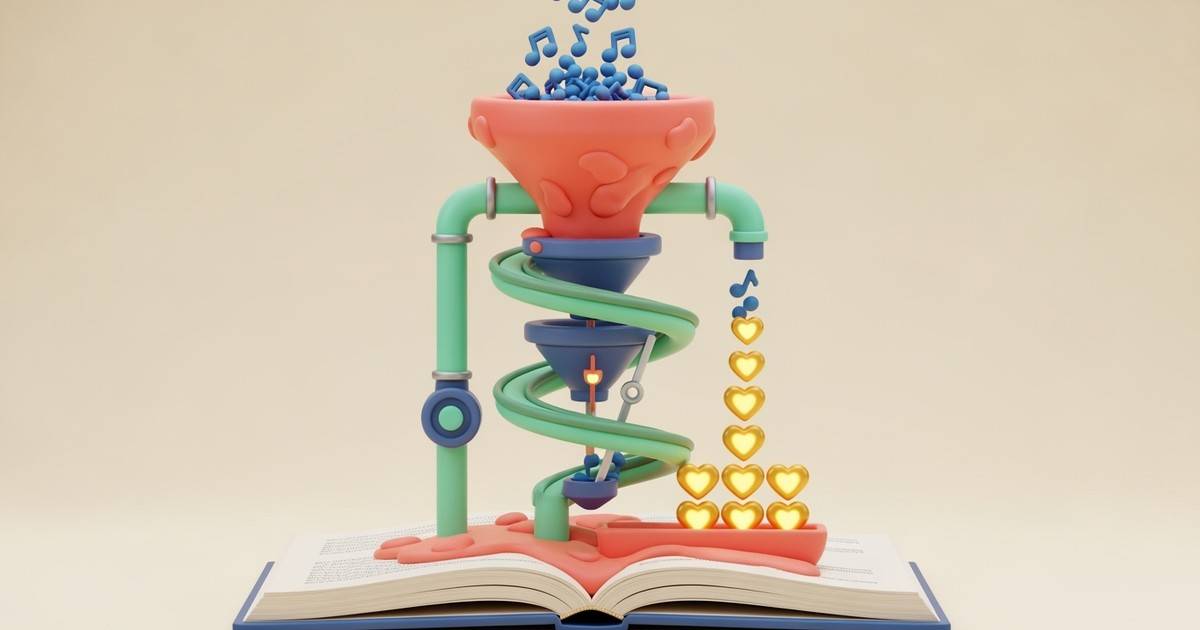
The era of "post and pray" is over. Music marketing in 2026 is no longer about chasing viral lottery tickets or hoping an algorithm decides to bless you. It is about engineering a predictable, data-backed system that turns casual listeners into high-value fans who stream, save, follow, buy merch, and show up to shows.
This playbook outlines the strategic framework for the modern artist business. It moves beyond tactical tricks (which change weekly) to focus on the fundamental levers of growth: algorithm training, data ownership, cross-platform funnels, and automated campaign architecture.
Start Here by Goal
- I need automated music campaigns software, not just strategy: Use Dynamoi's campaign platform for execution, then return here for planning frameworks.
- I need a release plan I can execute this quarter: Start with the Music Release Marketing Timeline, then tighten sequencing with Cross-Platform Music Campaign Strategy.
- I need better ad performance without wasting budget: Read How to Use Ad Tech for Music Promotion, then set spend rules with Music Marketing Budget Allocation Guide.
- I need to turn social attention into real streams and saves: Use TikTok to Spotify: Converting Viral Moments to Streams and support it with Content Marketing for Musicians.
- I need a stronger artist identity, not just more posts: Build your positioning with The Art of Marketing for Music Brands.
- I need a growth model that can support full-time income: Start with Indie Artist Marketing Without a Label, then benchmark goals using How Many Spotify Listeners to Make a Living?.
All Spokes in This Hub
Guides
- AI Music Marketing Automation
- Content Marketing for Musicians
- Cross-Platform Music Campaign Strategy
- Indie Artist Marketing Without a Label
- How to Use Ad Tech for Music Promotion
- Music Marketing Budget Allocation Guide
- Music Release Marketing Timeline
- The Art of Marketing for Music Brands
- The Evolution of Digital Music Marketing
- TikTok to Spotify: Converting Viral Moments to Streams
Lists
- Top 10 Influencer Marketing Platforms for Musicians
- Best Music Distribution Services
- Top 10 Music Marketing Agencies
- Top 10 Playlist Pitching Services
FAQs
Statistics
Comparisons
1. A new reality: algorithm first, human second
The primary gatekeepers of the music industry are no longer label A&Rs or radio DJs. They are the recommendation algorithms of Spotify, YouTube, and TikTok.
Every time a listener saves a song, replays a track, or watches a video to completion, they send a signal. These signals train the algorithms to show that content to more people with similar tastes. Your marketing strategy must be designed to generate high-quality signals at scale.
Signal Quality Over Vanity Metrics
A thousand streams from listeners who skip after 10 seconds (low signal) will hurt your long-term growth. Those skips tell the algorithm your music does not hold attention, which suppresses future recommendations. One hundred streams from listeners who save the track and add it to personal playlists (high signal) will unlock algorithmic reach like Release Radar, Discover Weekly, and Radio.
| Signal Type | Platform Example | Impact |
|---|---|---|
| Save / Library Add | Spotify, Apple Music | High positive: indicates replay intent |
| Skip before 30 seconds | Spotify | Negative: signals poor match |
| Repeat listen within 7 days | All DSPs | Strong positive: habit formation |
| Playlist add | Spotify, Apple Music | High positive: curation signal |
| Watch time > 50% | YouTube, TikTok | Positive: content quality indicator |
| Follow / Subscribe | All platforms | Strong positive: long-term value |
The Feedback Loop
The practical application is a continuous cycle:
- Use short-form video (TikTok, Reels, Shorts) to find an audience that resonates with your sound
- Drive that audience to streaming platforms to generate engagement data
- Analyze which segments save, replay, and follow at the highest rates
- Use that data to refine your next round of content and targeting
- Repeat with each release
This loop compounds. Artists who run it consistently build algorithmic momentum that makes each subsequent release easier to promote than the last.
2. Brand Identity in the Age of AI
As generative AI lowers the barrier to creating "content," the value of context skyrockets. Anyone can generate a beat, a lyric, or a visual. What cannot be manufactured is a coherent artist identity that fans genuinely connect with.
A strong artist brand is the only moat against commoditization. It is what makes listeners choose your music over the 100,000+ tracks uploaded to DSPs every day.
The "World-Building" Approach
The most successful artist brands do not just release songs. They build worlds. This means creating a consistent universe across every touchpoint: cover art, music videos, social presence, merchandise, and live shows.
A fan should recognize your post on Instagram without seeing your handle. That level of visual and tonal consistency is the bar.
Key elements of world-building:
- Visual system: Consistent color palette, typography, imagery style, and cover art direction
- Tone of voice: How you write captions, respond to comments, and describe your music
- Recurring motifs: Symbols, characters, or themes that appear across releases
- Narrative arc: A story that unfolds over multiple releases, giving fans a reason to follow along
For deeper guidance on building your artist brand, see the brand marketing guide.
Authenticity as Competitive Advantage
In a synthetic world, raw and unpolished moments often outperform high-production gloss. Studio sessions, voice memos of early ideas, behind-the-scenes footage of creative decisions: this content humanizes artists in ways AI cannot replicate.
The artists gaining traction in 2026 understand that their personality, process, and perspective are the product, not just the finished song.
3. The Social-to-Stream Funnel
[[MarketingFunnelDiagram]]
The "Social-to-Stream" pipeline is the core mechanic of modern music marketing. Social platforms capture attention. Streaming platforms capture value. The funnel connects them.
Going viral is not enough. A TikTok video with 10 million views and zero saves on Spotify is a missed opportunity. The goal is to build infrastructure that converts attention into durable fan relationships.
Funnel Stages Explained
Top of Funnel: Awareness
Viral moments on TikTok, Reels, and Shorts. This is cheap, broad attention. The cost per impression is low, but so is the intent. Most viewers will not take action unless prompted.
Tactics: Hook-first content, trends with your music layered in, storytime formats, challenges, and duets.
Middle of Funnel: Consideration
Direct traffic to a smart link or "Link in Bio" page. This is where passive viewers become active clickers. Retarget video viewers with ads for your next release to keep your music top of mind.
Tactics: Clear CTAs in captions and pinned comments, smart links with save/follow prioritized, retargeting campaigns.
Bottom of Funnel: Conversion
The listener clicks "Save" or "Follow" on Spotify or Apple Music. This is the moment of value capture. A save is worth far more than a stream because it signals future replay intent.
Tactics: Pre-save campaigns, friction-light landing pages, one-tap actions.
Retention: Loyalty
The listener follows the artist, joins the mailing list, or buys merch. This is where you move fans from rented land (social platforms) to owned land (email, SMS, Discord).
Tactics: Email capture on smart links, exclusive content for subscribers, community building.
For a detailed breakdown of converting TikTok attention to Spotify saves, see the TikTok-to-Spotify conversion guide.
4. Ad Tech and Automation: Scaling Without Burnout
Manual hustling has physical limits. There are only so many hours in a day to post content, respond to comments, and analyze data. Smart artists use ad tech and automation to scale their reach without scaling their workload.
Paid Media Fundamentals
Paid advertising on Meta (Instagram/Facebook), TikTok, YouTube, and Snapchat allows you to reach potential fans based on their actual behavior, not just demographics. You can target people who have listened to similar artists, engaged with music content, or visited your profiles.
The key metrics for music advertising differ from e-commerce:
| Metric | What It Measures | Target Benchmark |
|---|---|---|
| Cost per Click (CPC) | How much to get someone to your smart link | $0.20-0.50 |
| Click-Through Rate (CTR) | Percentage who click after seeing the ad | 1-3% |
| Save Rate | Percentage of link visitors who save | 15-30% |
| Cost per Save | Total spend to acquire one save | $0.30-0.80 |
| Follow Rate | Percentage who follow after saving | 10-20% |
These benchmarks vary by genre, geography, and creative quality. The goal is to establish your own baselines and improve them over time.
For a full guide to ad tech for music, see How to Use Ad Tech for Music Promotion.
Automation That Actually Helps
Automation in 2026 is not about replacing creative decisions. It is about eliminating repetitive tasks so you can focus on the work that requires human judgment.
Practical automation use cases:
- Asset formatting: Automatically resize videos and images for each platform's specs
- UTM management: Generate tracking links with consistent naming conventions
- Bid optimization: Let platforms adjust ad bids based on real-time performance
- Reporting: Pull data from multiple platforms into a single dashboard
- Scheduling: Queue content for optimal posting times across time zones
For a step-by-step guide to building an automation stack, see AI Music Marketing Automation.
5. Diversifying Revenue: The Portfolio Mindset
Streaming royalties are the engine of modern music income, but they are rarely the entire car. A healthy music business has multiple revenue streams that compound over time.
Revenue Stream Breakdown
Streaming Royalties
The baseline. Per-stream payouts vary by platform, listener geography, and subscription type. Based on Dynamoi's first-party streaming data:
- Spotify: $2.97 RPM ($0.0030 per stream)
- Apple Music: $5.43 RPM ($0.0054 per stream)
- YouTube Art Tracks: $5.24 RPM ($0.0052 per stream)
At these rates, generating meaningful income requires scale. An artist needs roughly 300,000-400,000 monthly streams to earn a full-time income from streaming alone.
Direct-to-Fan (D2F)
Selling merch, vinyl, digital products, and experiences directly to your audience yields significantly higher margins than streaming. A $30 t-shirt sale can equal thousands of streams in revenue.
The catch: D2F only works when you have engaged fans willing to spend. This is why email list building and community cultivation matter so much.
Sync Licensing
Placing music in TV, film, games, and advertisements remains a lucrative revenue source. Sync fees range from a few hundred dollars for small placements to six figures for major brand campaigns.
Sync requires proactive pitching or working with a sync agent. Having clean metadata, stem files, and quick turnaround on licensing requests makes artists more attractive to music supervisors.
Live Touring
For established acts, touring is often the primary revenue driver. Use streaming data to route tours through cities where you actually have listeners. Spotify for Artists and Apple Music for Artists both provide geographic data that can inform tour planning.
Publishing and Royalties
If you write your own songs, publishing royalties from performance (radio, streaming, live venues) and mechanical (physical and digital reproduction) sources add another income layer. Register with a PRO and consider publishing administration to collect global royalties.
6. Platform Specifics: Beyond Spotify
While Spotify is the market leader in most Western markets, ignoring other Digital Service Providers (DSPs) leaves money on the table. Each platform has distinct characteristics worth understanding.
Spotify
The default for algorithmic discovery. Personalized playlists like Discover Weekly, Release Radar, and Daily Mix drive a large share of streams. Success on Spotify requires generating strong engagement signals (saves, replays, playlist adds) to trigger algorithmic amplification.
Key tools: Spotify for Artists, Marquee, Showcase, Discovery Mode, Canvas.
Apple Music
A more album-oriented, premium listener base. Per-stream payouts are generally higher than Spotify. Editorial playlists and Apple Music Radio carry significant weight. The platform rewards high-fidelity audio (Apple Digital Masters) and immersive formats (Spatial Audio with Dolby Atmos).
See the Apple Music for Artists Glossary for key terms and metrics.
YouTube and YouTube Music
The largest music platform globally by reach. YouTube's algorithm rewards watch time and retention, making it ideal for visual artists and those who can produce compelling video content. Shorts provides a discovery surface comparable to TikTok.
YouTube Music integrates with the broader YouTube platform, meaning a popular music video can drive audio streams and vice versa.
Pandora
Still a massive radio-style player in the US. Pandora's AMP (Artist Marketing Platform) offers unique tools like Artist Audio Messages, where you can record spoken intros that play before your songs. This creates an intimate, radio-DJ-style experience.
TikTok
The dominant discovery platform for new music. TikTok's algorithm surfaces content based on engagement rather than follower count, making it possible for unknown artists to reach millions. However, TikTok views do not directly translate to streams without a clear conversion path.
Amazon Music
Integration with Alexa makes voice-search optimization increasingly important. Phrases like "Alexa, play the new song by [Artist]" are becoming common discovery methods. Ensure your metadata is clean and your artist name is easily pronounceable.
For a data-backed comparison of where to allocate budget across platforms, see Spotify Promotion vs. Apple Music, YouTube, and TikTok.
7. The 2026 Mindset: Data Ownership
The most dangerous metric in 2026 is "Followers." You do not own your followers. The platform does. Algorithm changes, policy updates, or account issues can wipe out years of audience building overnight.
Rented Land vs. Owned Land
| Rented Land | Owned Land |
|---|---|
| TikTok followers | Email list |
| Instagram followers | SMS list |
| Spotify followers | Discord/community members |
| YouTube subscribers | Direct purchase customers |
Your long-term goal must be to move fans from rented land to owned land. An email list of 5,000 active fans is often worth more than a TikTok following of 50,000 because you can reach them directly, without algorithmic interference, whenever you have something to say.
Building Owned Audiences
Practical tactics for list building:
- Pre-save gates: Require email entry before redirecting to pre-save
- Exclusive content: Offer demos, stems, or early access in exchange for signup
- Contest entries: Use giveaways that require email to enter
- Smart link capture: Add email fields to your landing pages
- Community platforms: Build a Discord or Circle community for superfans
First-Party Data in a Privacy-First World
As third-party cookies phase out and privacy regulations tighten, first-party data (data you collect directly from fans) becomes increasingly valuable. Every email address, phone number, and direct purchase gives you targeting capability that does not depend on ad platform policies.
Putting It All Together
This playbook is not a checklist. It is a way of thinking about the modern music business.
The artists who compound in 2026 share common traits:
- They treat marketing as a system, not a series of one-off tactics
- They prioritize signal quality over vanity metrics
- They build brand worlds, not just release songs
- They own their fan relationships through email and community
- They automate repetitive tasks to focus on creative work
- They diversify revenue beyond streaming
By aligning your daily tactics with these strategic pillars, you build a career that can survive the algorithm changes of tomorrow. The platforms will evolve, the specific tactics will shift, but the fundamentals remain: create great music, build genuine connections, capture data, and compound over time.