

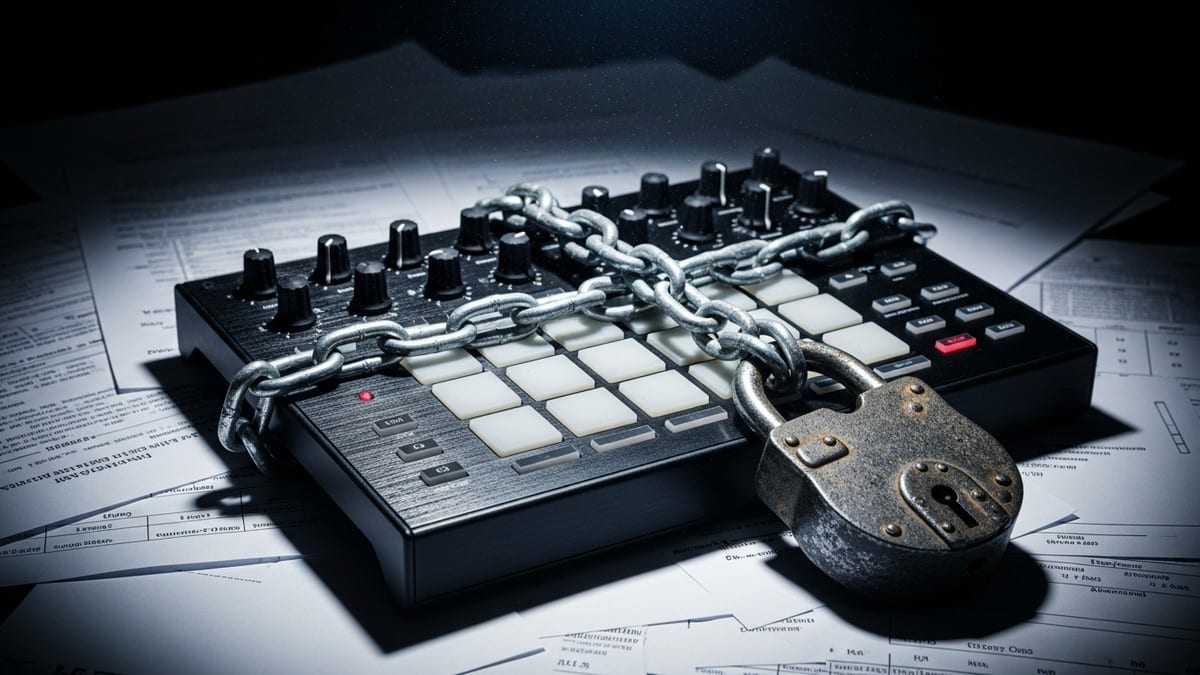
Native Instruments, the Berlin-based titan behind industry-standard production tools like Kontakt and Maschine, entered preliminary insolvency proceedings on January 27, 2026. This legal move strips financial control from private equity owners Francisco Partners and places the company's future in the hands of court-appointed administrator Prof. Dr. Torsten Martini.
For music business professionals, this is not just a vendor story. It is a potential supply chain crisis for the global production infrastructure.
The failed "supergroup" strategy
This insolvency marks the collapse of one of the most aggressive consolidation plays in music tech history. Following Francisco Partners' majority acquisition in 2021, Native Instruments was merged with audio engineering giants iZotope and Plugin Alliance to form a conglomerate initially branded as Soundwide.
The thesis was clear: bundle distinct creative workflows—beatmaking, mixing, and mastering—into a single subscription ecosystem. That thesis has evidently failed to generate sustainable liquidity. The rollback of the Soundwide brand in 2023 and subsequent layoffs (8% of the workforce) were early warning signs, but the appointment of an insolvency administrator signals that the company's debt structure is no longer viable.
The "Kontakt" ripple effect
The most urgent risk for the industry lies in the stability of Kontakt. This sampler is not merely a product; it is a platform that supports a massive economy of third-party developers. Companies like Spitfire Audio and Heavyocity rely on Native Instruments' proprietary encoding and authorization servers (Native Access) to deliver their products to customers.
Key insight: If
Kontaktdevelopment freezes or authorization servers go dark, it doesn't just hurt Native Instruments. It freezes revenue for hundreds of boutique developers who built their businesses on the NI architecture.
Potential acquirers circle
Administrator Dr. Martini's primary role is to secure assets and determine if the business can be saved or must be sold in parts. This likely triggers a "fire sale" scenario where competitors bid for valuable IP.
- Hardware players: InMusic Brands (owner of Akai) could target the
MaschineandTraktorlines to consolidate the DJ and beatmaker hardware market. - DAW giants: Apple or Ableton could acquire iZotope to integrate
RXaudio repair technology directly into their workstations. - Catalog holders: Splice could bid for the sound content infrastructure to bolster its sample marketplace dominance.
Operational risks for labels
The immediate danger is technical debt. A prolonged insolvency process could pause driver updates for hardware or break compatibility with future OS updates. Studios relying on Native Access for daily workflow authorization face a tangible business continuity risk.
Action items for production teams
Strategic managers should treat this as a signal to audit their technical dependencies.
- Secure authorizations: Ensure all critical plugins and libraries are authorized on offline-capable machines immediately.
- Print audio stems: For active albums, mandate that producers bounce audio files rather than relying on live MIDI triggering of NI instruments.
- Diversify hardware: Touring artists using
TraktororMaschineshould evaluate backup rigs from competitors like Pioneer DJ or Ableton to mitigate the risk of discontinued driver support.