

Beyond the 2024 blackout
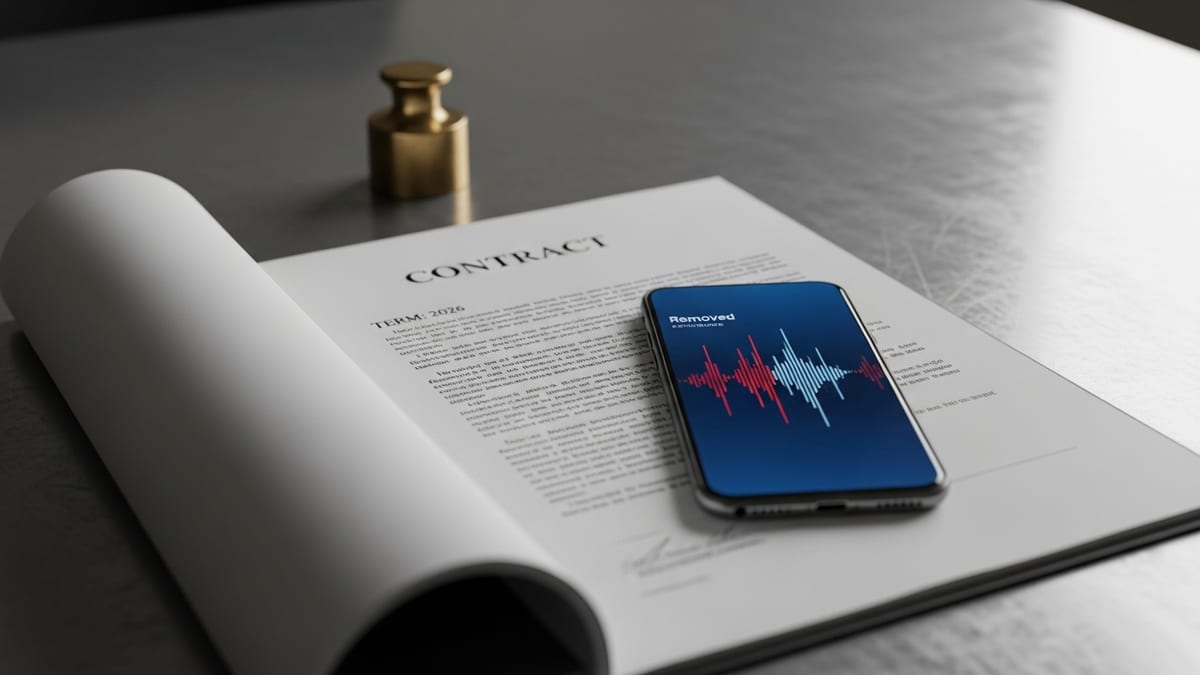
Universal Music Group and TikTok have finalized a multi-year successor agreement running through 2026, deepening the framework established after their high-stakes catalog blackout. The original standoff revealed a stark financial asymmetry: prior to the dispute, TikTok paid UMG an estimated $111 million annually. UMG Chairman Sir Lucian Grainge pointedly noted this accounted for roughly 1% of total revenue. By treating its global catalog as essential infrastructure rather than optional content, UMG successfully forced a renegotiation that shifts the focus from pure exposure to protected economics.
Policing the royalty pool
Generative artificial intelligence sits at the center of this renewed pact. The agreement establishes a contractual mandate for TikTok to remove unauthorized AI-generated music and develop granular attribution tools for human creators. Label strategists should view this as a permanent shift in licensing mechanics.
Key insight: Content platforms must now provide technical enforcement mechanisms against AI clones as a baseline requirement for major label access.
The era of relying on gray-area fan covers for viral marketing is ending. Marketers must pivot toward authorized stems and official remix tools to drive engagement without violating takedown protocols.
Social commerce storefronts
TikTok is rapidly transitioning from a discovery feed into a conversion engine. The 2026 deal deeply integrates the platform's commerce infrastructure with UMG's roster, moving fans from casual viewers to paying customers in a single session.
- The benefit: Artists link viral moments directly to revenue via TikTok Shop and integrated Ticketmaster routing.
- The risk: Fans experiencing social fatigue may resist aggressive in-app monetization pushes.
- Works when: Managers utilize the
Add to Music Appfeature to funnel passive scrollers into active listeners on Spotify or Apple Music. - Fails when: Campaigns treat TikTok solely as a billboard rather than a full-funnel retail environment.
Managers tracking ROAS and overall conversion metrics must now demand granular analytics from platform partners to measure how 15-second clips translate into tangible ticket sales.
A substitution effect emerges
The 2024 blackout provided a rare natural experiment regarding platform leverage. A University of Washington study tracking the dispute revealed diverging impacts based on artist scale.
| Artist Tier | Impact on Spotify Streams | TikTok Dependency |
|---|---|---|
| Superstars | +2% to +3% | Low |
| Emerging | -1% to -3% | High |
When UMG pulled hits from Taylor Swift and Drake, audiences simply opened other apps to find them. However, emerging acts suffered measurable streaming declines without algorithmic tailwinds. This data suggests TikTok needs major superstars more than the superstars need TikTok, while independent and developing artists remain heavily reliant on the platform's discovery algorithm.
Closing the indie value gap
While UMG secures premium terms and robust AI safeguards, the broader industry faces lingering questions about market equity. Independent labels and smaller distributors lack the catalog weight to orchestrate unilateral blackouts. If automated moderation systems struggle to distinguish between a sanctioned artist filter and an unauthorized deepfake at scale, smaller rightsholders may find themselves battling algorithmic noise without the same dedicated support channels. The precedent set by Grainge, Michael Nash, and TikTok CEO Shou Chew establishes a new ceiling for digital rights, but the floor for independent creators remains undefined.