Reels-first Instagram ads playbook for music promotion. Covers creative testing, Advantage+ targeting, funnels to DSPs and YouTube, and realistic performance benchmarks.
42 articles in this topic
To promote music on Instagram in 2026, run Reels-first discovery campaigns, bridge traffic through a save-focused landing page, and optimize toward confirmed intent events.
Targeting on Instagram is now model-led. Learn how to use broad Advantage+ audiences, when to add guardrails, and how to retarget music intent without shrinking scale.
Instagram is discovery. DSPs and YouTube are retention. Learn the bridge‑first funnel that turns IG attention into saves, repeat streams, and watch sessions.
Realistic budget tiers and performance ranges for Instagram music ads. Learn how to split spend between discovery and intent, and when to scale.
Website visitors who already clicked are 70% more likely to convert. Set up pixel tracking, custom audiences, and a retargeting sequence that turns curiosity into fans.
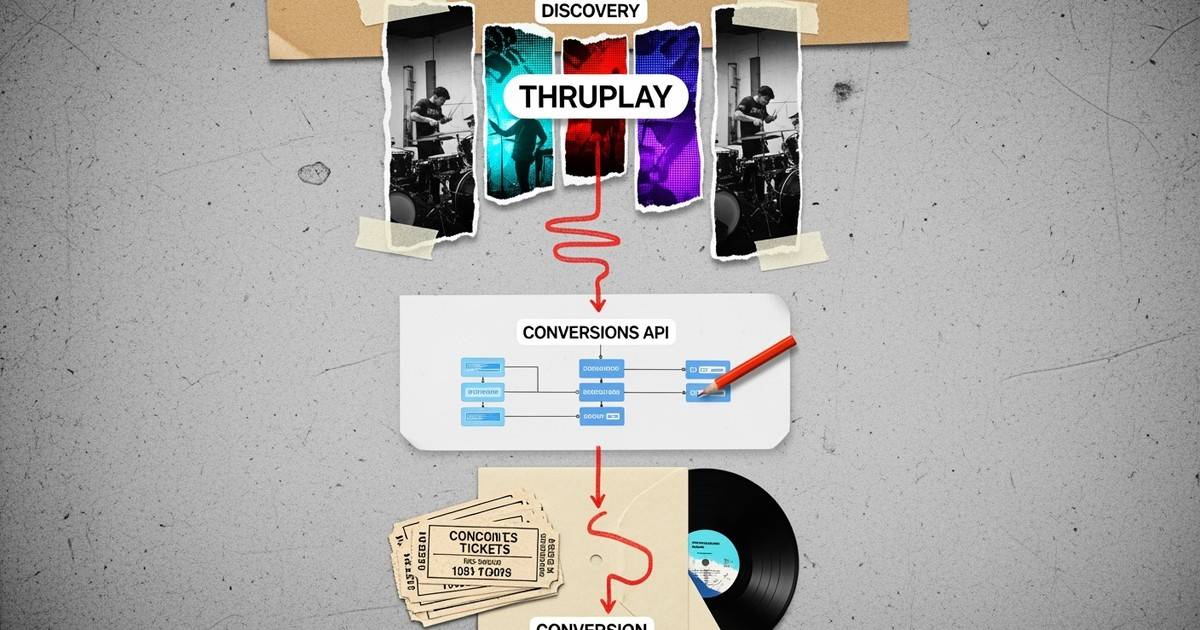
iOS tracking loss broke browser-only measurement. CAPI sends events server-side so Meta can optimize for real music intent like saves and follows, not cheap clicks.
Good ThruPlay rate for music ads is 25%+, great is 35%+, with 18-35% typical for cold audiences on short vertical clips. Full benchmark stack inside.
Pre-release Instagram strategy that converts followers into pre-saves. Teaser timing, countdown content, and the ads sequence that makes release day count.
For most 2026 music campaigns, start with Engagement for discovery, then move to Leads or Sales after clean save/follow intent tracking is in place.
Music videos are assets, not destinations. This guide covers vertical cuts, hook structures, cross-platform funnels to YouTube, and budget splits that make IG the discovery layer for your full video.
Advantage+ placements let Meta route your ads across Reels, Stories, Feed, and more. For music, default to Advantage+, then lock placements only when you have a reason.
Phase your album campaign across pre-release, release week, and sustain. Budget and creative strategy differ at each stage.
Build lookalikes from intent signals like saves and follows, not clicks. Size and seed quality matter more than percentage tweaks.
Reels placements are Meta's discovery engine. Learn which Reels ad formats work for songs, how to structure hooks, and when to expand into Stories and Feed.
Influencer partnerships can accelerate music discovery if you pick the right creators and structure deals that convert. Covers sourcing, negotiation, briefs, and ROI measurement.
When frequency climbs and saves drop, your creative is dying. This guide covers frequency caps, rotation schedules, audience refresh, and recovery tactics for music campaigns.
Your first job is to find the clip that makes people stop scrolling. This guide shows how to test hooks, structures, and angles for songs without burning budget.
Genre-specific targeting for hip-hop campaigns. Use subgenre signals, geographic clusters, and creative that speaks the culture instead of generic music lover stacks.
Cost per save varies dramatically by campaign type. Playlist campaigns average $0.25/save while artist singles average $1-$3/save. Here are Dynamoi's first-party benchmarks.
Yes, but only if the ad drives qualified attention into a save-first funnel. Optimizing for clicks or cheap views usually creates traffic that never becomes listening.
Instagram's in-app music library is mostly licensed for organic use, not ads. If you boost or run Ads Manager spend, Meta may mute or replace audio unless you have ad rights.
Views without saves usually mean you bought attention but not fit. Fix the hook-to-landing bridge, optimize to confirmed intent, and retarget engaged viewers with a second angle.
Learning phase means Meta is still testing delivery. For music, it usually gets "stuck" because your optimization event is too rare or your tracking is noisy.
Good CPM depends on genre, country tier, and creative quality. For Reels discovery in 2026, most music campaigns land in a mid-single-digit to low-teens range.
Boosting is fine for quick discovery tests, but Ads Manager is required for real funnels, audience control, and optimization to saves or follows.
Advantage+ audience works well for music when your creative is strong, but manual targeting wins if you have limited budget or a niche genre.
For music ads, $10 to $30 per day per creative is the realistic testing floor. Below that, Meta cannot learn fast enough to give you useful signal.
Set Instagram music ad spend from target cost-per-save and event volume, not guesswork. Most teams need enough daily budget to train Meta on real intent.
Most single release campaigns run 3-6 weeks total. Front-load budget in the first 48 hours, then sustain at lower spend while watching algorithmic pickup.
Yes, when they drive saves and repeat sessions. Spotify does not reward ad spend directly. It rewards the listener signals you can buy with good ads.
Not usually. Meta restricts using licensed catalog music in ads unless you have explicit ad rights. Use original audio, cleared stems, or Meta's approved music options.
Technically yes, but learning will be painfully slow. At $5/day you might get 500 to 1,500 impressions and a handful of ThruPlays, not enough signal for real optimization.
Realistic performance ranges for Instagram music ads in 2026, based on active campaign data across genres and country tiers. Use these to set expectations and diagnose issues.
Instagram matches TikTok as a music discovery source (40% vs 36% among US music followers). But no public Reels-to-streams conversion benchmarks exist.
CPM benchmarks for music ads depend on objective, market tier, and creative quality. See realistic ranges, understand what drives costs up, and learn when high CPM is acceptable.
The best landing page for Instagram music ads is the one that loads fast, has one primary save action, and sends clean server-side intent events.
Both platforms can break songs, but they behave differently. Instagram buys broad culture reach. TikTok buys trend velocity. Use this comparison to choose the right lead channel.
Reels usually win cold discovery. Stories usually win warm retargeting. Most scalable music campaigns use Reels first, then Stories after intent is proven.
Facebook is not dead for music marketing, but its role has changed. It now excels at event promotion, older demographics, and retargeting while Instagram handles discovery.
Organic Reels build trust and testing signal. Paid Reels scale proven hooks on a deadline. Most commercial releases need both, used in sequence.
The most common ways artists and labels waste budget on Instagram ads. From skipping the bridge to over‑retargeting, these mistakes turn ad spend into vanity metrics.
The first 2 seconds determine whether your ad gets watched or skipped. These hook structures work for music because they earn attention before asking for it.
